February 26, 2026
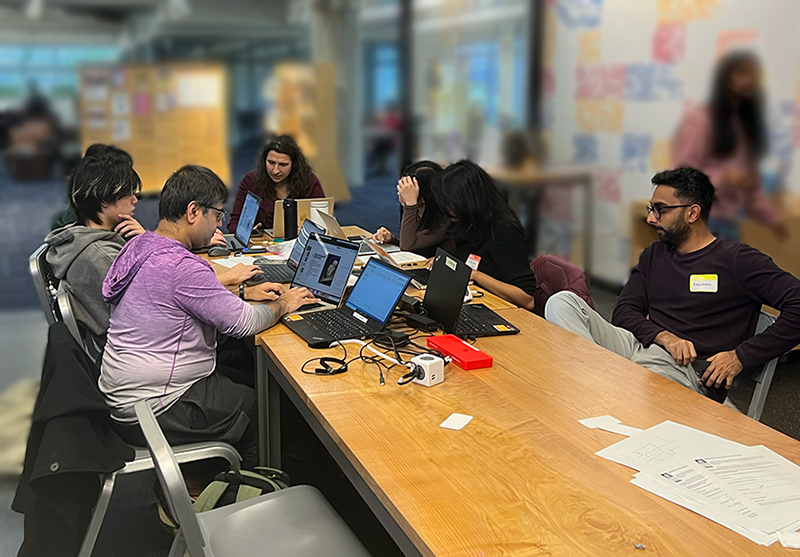
In January, CREATE and HuskyADAPT teamed up with the King County Library System (KCLS) to host a mini-hackathon to brainstorm and prototype solutions to accessibility problems.
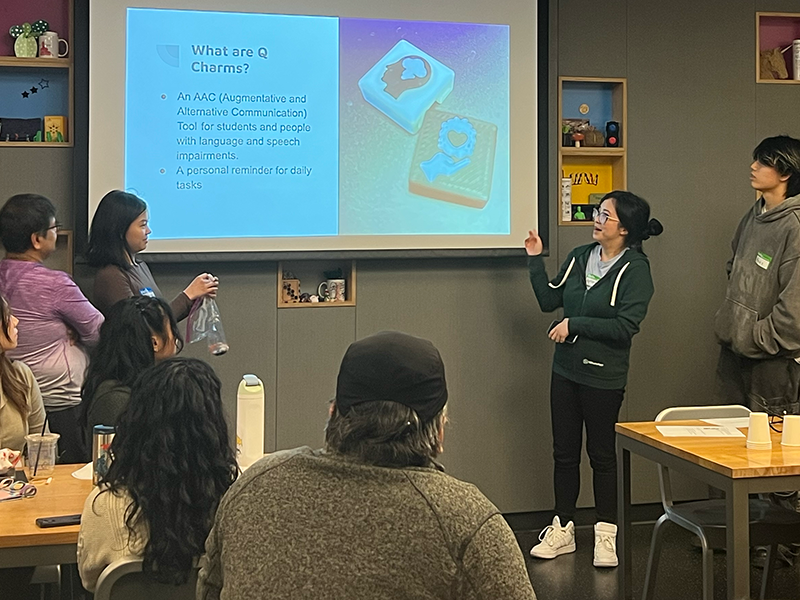
After an introduction to five real-world requests submitted by the disability community, participants self-selected their projects and got to work building their prototypes. These diverse teams of makers, researchers, disability professionals, and volunteers were assisted by community co-designers and design leads.
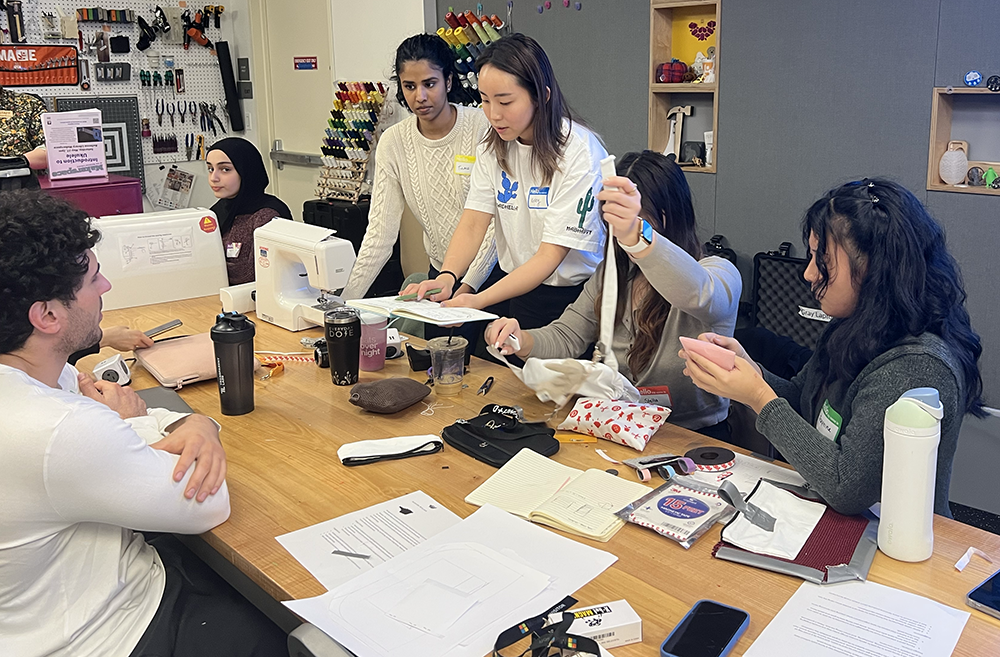
They worked in KCLS’s Bellevue Makerspace using moldable thermoplastic, cardboard, glue, tape, fabric, sewing machines, etc.
Participant feedback
“I genuinely had an enjoyable time during the event; it was a new and meaningful experience for me. I was a little confused at first, but my teammates and the people I connected with were very encouraging, which made the experience comfortable and engaging. I learned a lot throughout the day and really appreciated the opportunity for this collaborative event.”
“I truly appreciated the energy, creativity, and strong community engagement in the room. It was inspiring to see so many families and learners exploring hands-on innovation together.”
Projects at the 2026 event
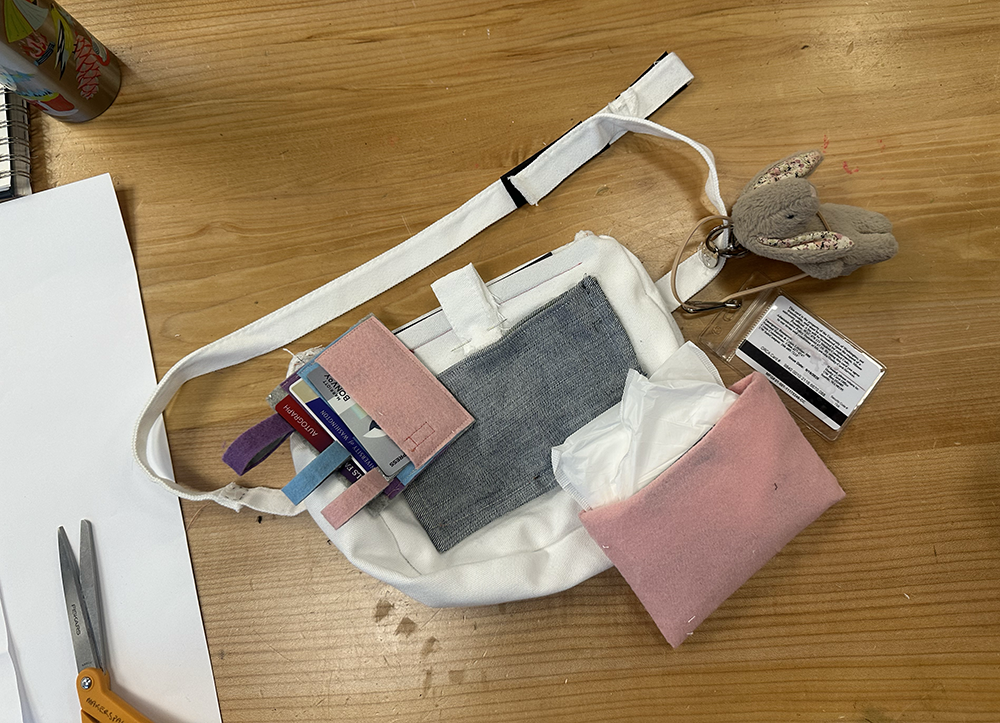
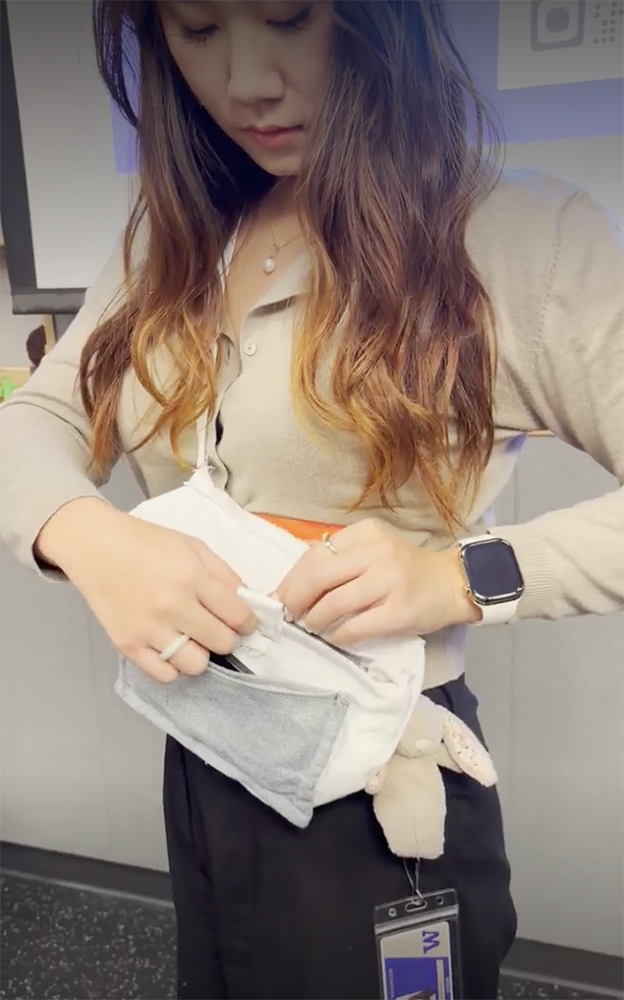
Accessible fanny pack
Goal: Design an easily organized fanny pack for a student with developmental disabilities who struggles with zippers, jumbled contents, and grasping specific items. Contexts include using the pack one-handed while communicating, purchasing, riding the bus, and other daily activities.
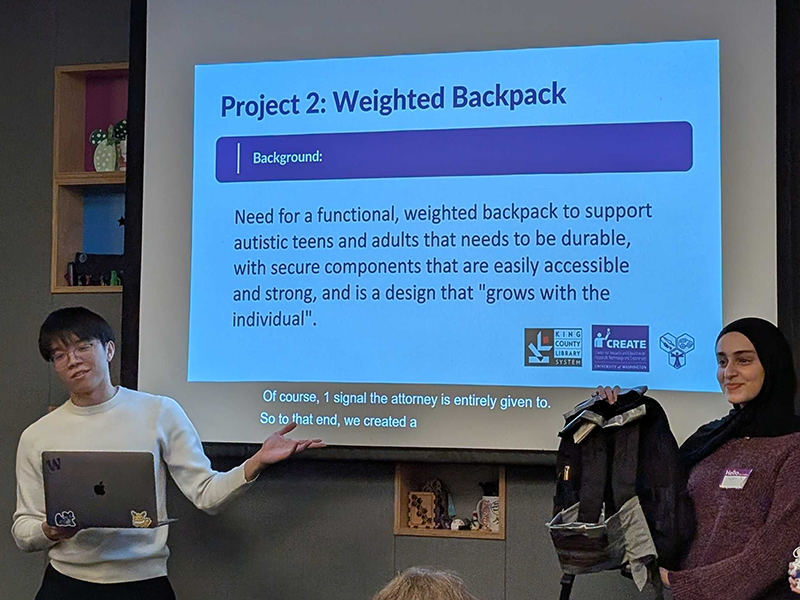
Weighted backpack
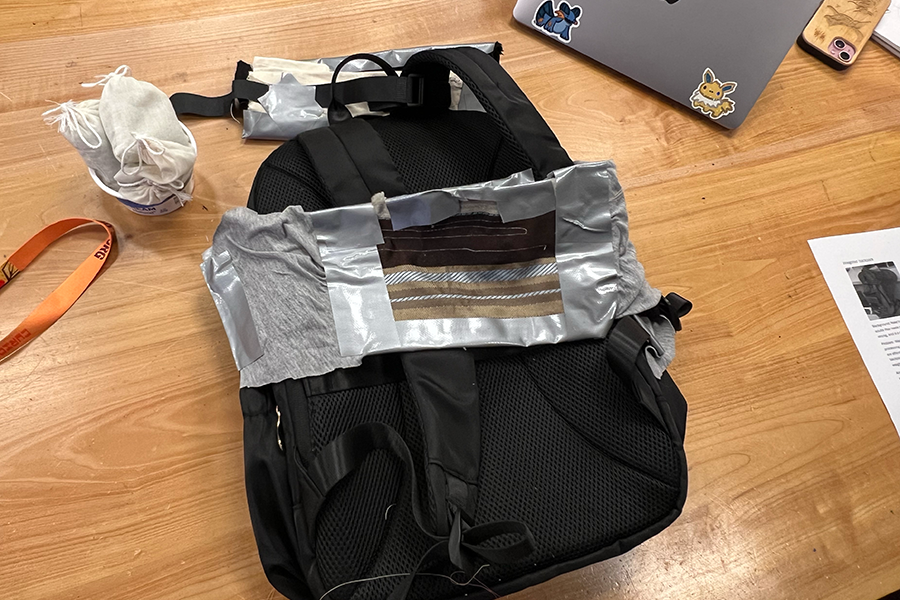
Goal: Adapt a weighted backpack for autistic teens and adults to support sensory processing differences. Challenges included design for durability, affordability, and visual aesthetics, with components that are easily accessible. Should grow with the the individual.
Easy-to-grasp hair clip
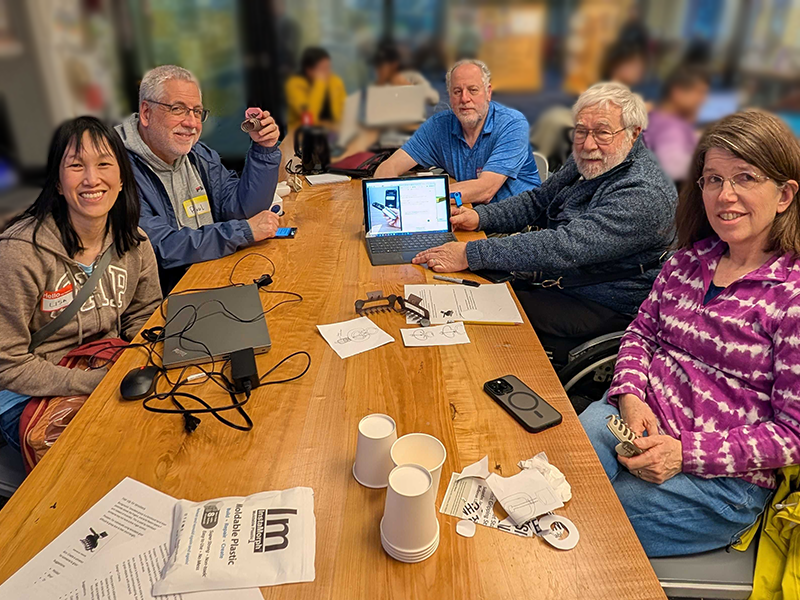
Goal: Create a universal design device to add usability to butterfly/claw-style hairclip handles to make grasping and using easier. A significant challenge was to design an adaptation that would work with a wide variety of hairclip designs. Members’ lived experience with arthritis informed the team’s work.
Q Charms accessories
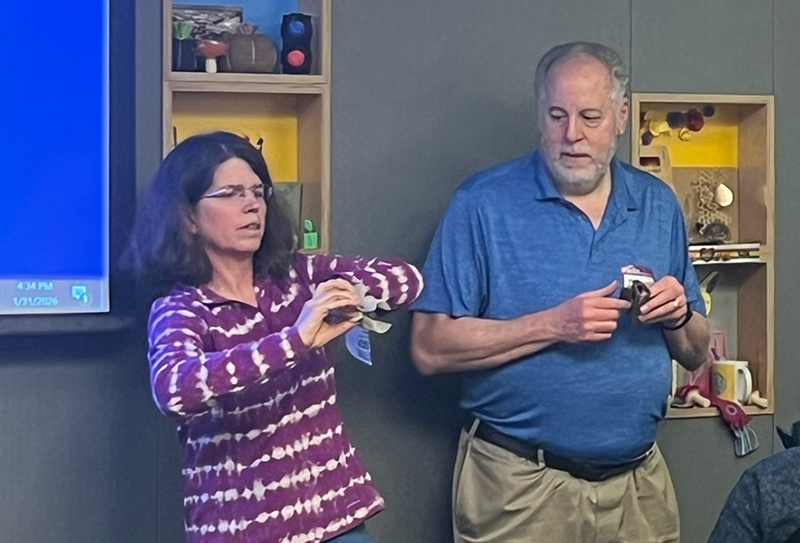
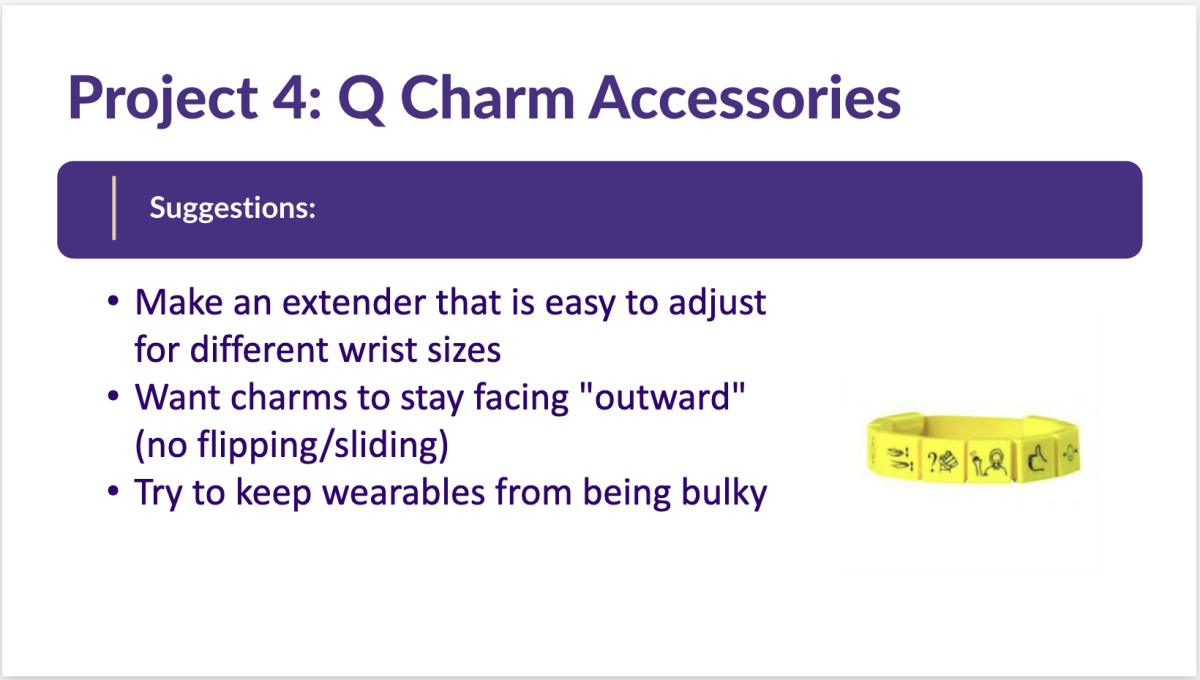
Q charms are jewelry-based tokens for Augmentative and Alternative Communication (AAC) icons. Goal: Using 3D-printed tokens that fit on a silicon wristband or bracelet, design an easily adjustable bracelet extender and also a lanyard that can have Q charms attached and detached. Challenges include avoiding bulk and keeping charms from spinning to to the inside.
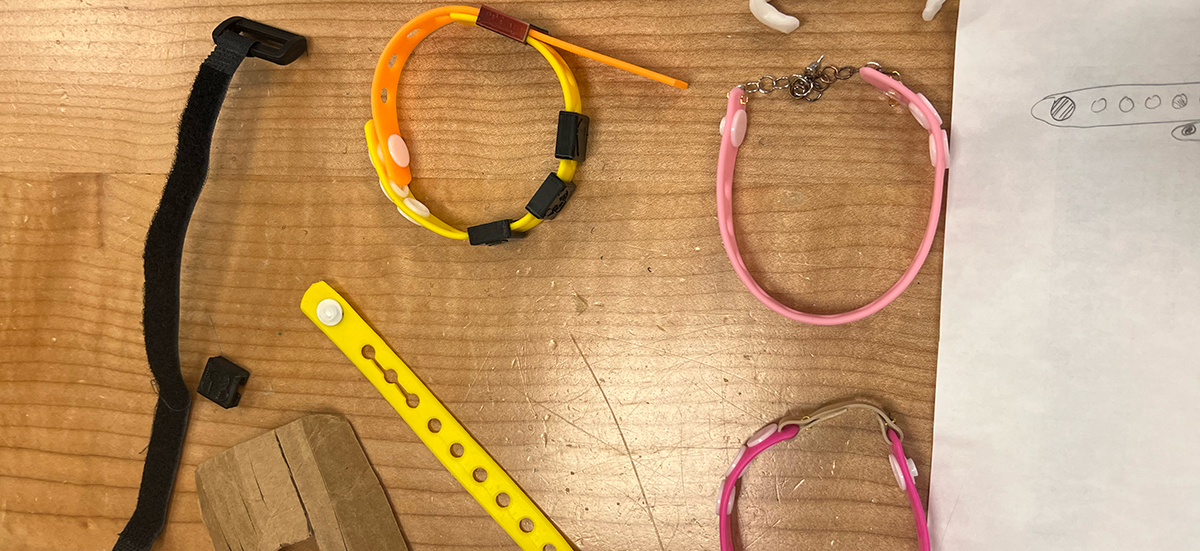
Customized Q Charms
Goal: Create an accessible, open source software pipeline for creating digital custom Q charm designs in CAD and design a Q charm that users can customize with any image of their choice on the spot.
Acknowledgements
We thank KCLS for the use of their Bellevue makerspace and HuskyADAPT students for their skillful and enthusiastic organization of the event.
Hackathon organizers
Annika Pfister
Hackathon co-host and HuskyADAPT Outreach Chair; 3rd-year Ph.D. student in Electrical & Computer Engineering

Tanvi Bachu
Hackathon co-host and HuskyADAPT Outreach Chair; 3rd-year undergraduate student in Electrical and Computer Engineering
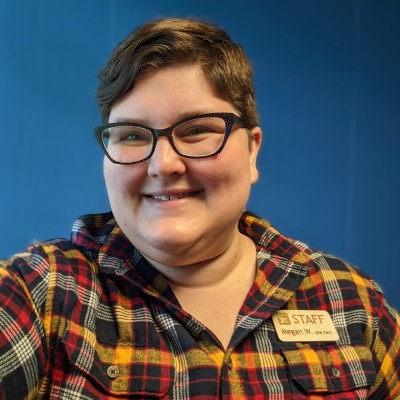
Megan Willan
Adult & Maker Services Librarian at King County Library System
Project design and feedback panelists
- Brennan Johnston, Assistive Technology Support Technician for Washington Assistive Technology Act Program (WATAP)
- Dr. Gaurav Chaudhari, software engineer at Google
- Kate Glazko – UW CREATE Ph.D. student and student representative; 3rd-year Ph.D. student and NSF grad student fellow at the Paul G. Allen School for Computer Science and Engineering
- Megan Willan, Adult & Maker Services Librarian at King County Library System
- Sarah Lemke, MOT, OTR/L, a licensed and board-certified occupational therapist at the University of Washington Autism Center