CREATE is the Center for Research and Education on Accessible Technology and Experiences. Our mission is to make technology accessible and to make the world accessible through technology. Our vision is a world where people with disabilities are full participants in shaping tomorrow’s world.
CREATE was founded in 2020 to address the barriers posed to people with disabilities created by rapidly emerging technologies.
CREATE fosters an interdisciplinary approach to accessibility, one capable of fixing small problems and scaling to address grand challenges. We bring together innovators from computer science, mechanical engineering, rehabilitation medicine, disability studies, human-centered design, and information science.
Our researchers, educators, developers, and innovators recognize that emerging technologies can pose new barriers to people with disabilities, and that they hold promise to remove older barriers.
Collaborating to build accessible futures
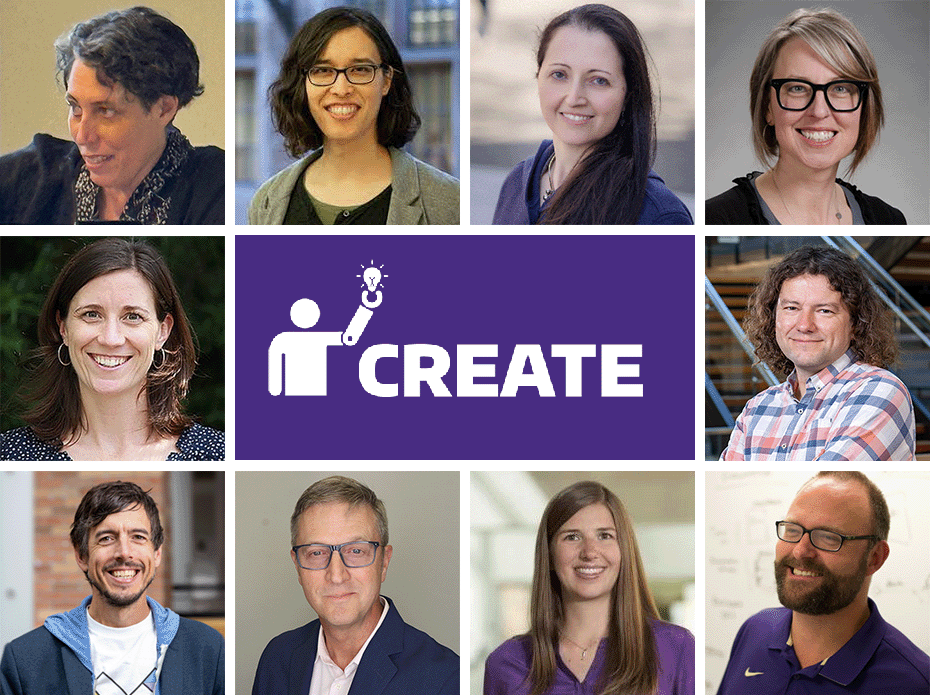
By bringing together researchers across multiple UW schools and departments, CREATE harnesses the diverse expertise necessary to realize a more just and equitable technological future, one that overcomes existing barriers and ensures new ones do not arise.
Centering disabled perspectives

Our commitment to ensure that innovative research draws from disabled people’s experiences starts with Center leadership (over 50% experiencing a disability). A robust community partners program fosters collaboration between students and local, regional, and national disability organizations.
Preparing future accessibility technologists to innovate
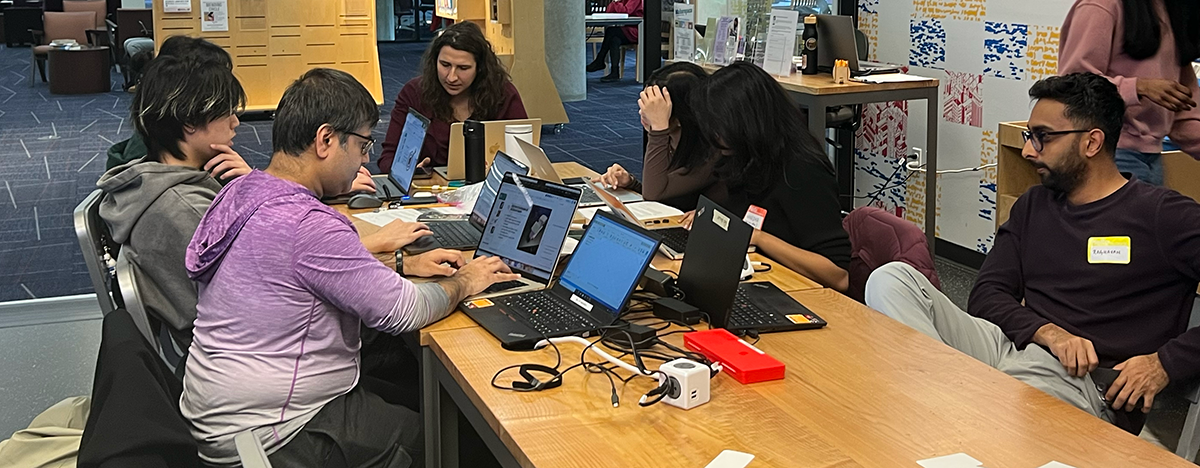
We work to ensure STEM education is accessible to students with disabilities and that our graduates enter the workforce fully educated in accessible technology and ready to create tangible, real-world impact.
Research translated to practical, open source tools

CREATE’s impact is evidenced by our researchers’ development of tools that are used by individuals, caregivers, product designers, and other researchers. Faculty and students have developed interaction techniques used on every phone, navigation tools deployed across the globe, accessibility studies cited by the Department of Justice on accessible technology, and over 100,000 downloads of accessibility tools.
Policy and advocacy
As researchers at the forefront of accessible technology, CREATE leaders are called to advise policy and are eager to share their education, experience, and perspectives regarding the needs of and resources for people living with disabilities.
CREATE’s policy efforts have directly impacted federal rulemaking including citing a CREATE article about work on mobile app accessibility in the recently released Department of Justice Notice of Proposed Rulemaking on the ADA’s application to digital technology and resources, “Nondiscrimination on the Basis of Disability; Accessibility of Web Information and Services of State and Local Government Entities.” CREATE developed a reviewer’s guide to encourage comment submissions.
Want to get involved?
There are multiple ways to support our efforts. First and foremost, CREATE is about people. As an individual, we encourage you to get involved and help us achieve our mission.
Second, the center employs a consortium model for academic, industry, and community partners. We aim to create the technology and innovation models that support our partners to be leaders and trendsetters in the deployment of accessible technology and inclusive communities. Our goal is to deeply engage with our partners to develop and share transformation technology, as well as a workforce that can help improve the accessibility of technology. Join our partnership program!
CREATE was founded in the summer of 2019 when a group of accessibility researchers from around campus came together to discuss common interests. Inaugural gift funding was provided thanks to the generosity of Microsoft. With the diversity of interests and common goals represented around the table, it became clear that a broader organizing body would help to amplify what each individual was doing.