CREATE’s research showcases bring industry and community partners — leaders working and living in the disability and accessibility space — together with faculty and student researchers.
Save the date for Community Day Research Showcase 2027!
- Wednesday, May 26, 2027
- Zillow Commons in Gates (CSE2)
- Details to be announced
Recap: 2026 Community Day Research Showcase
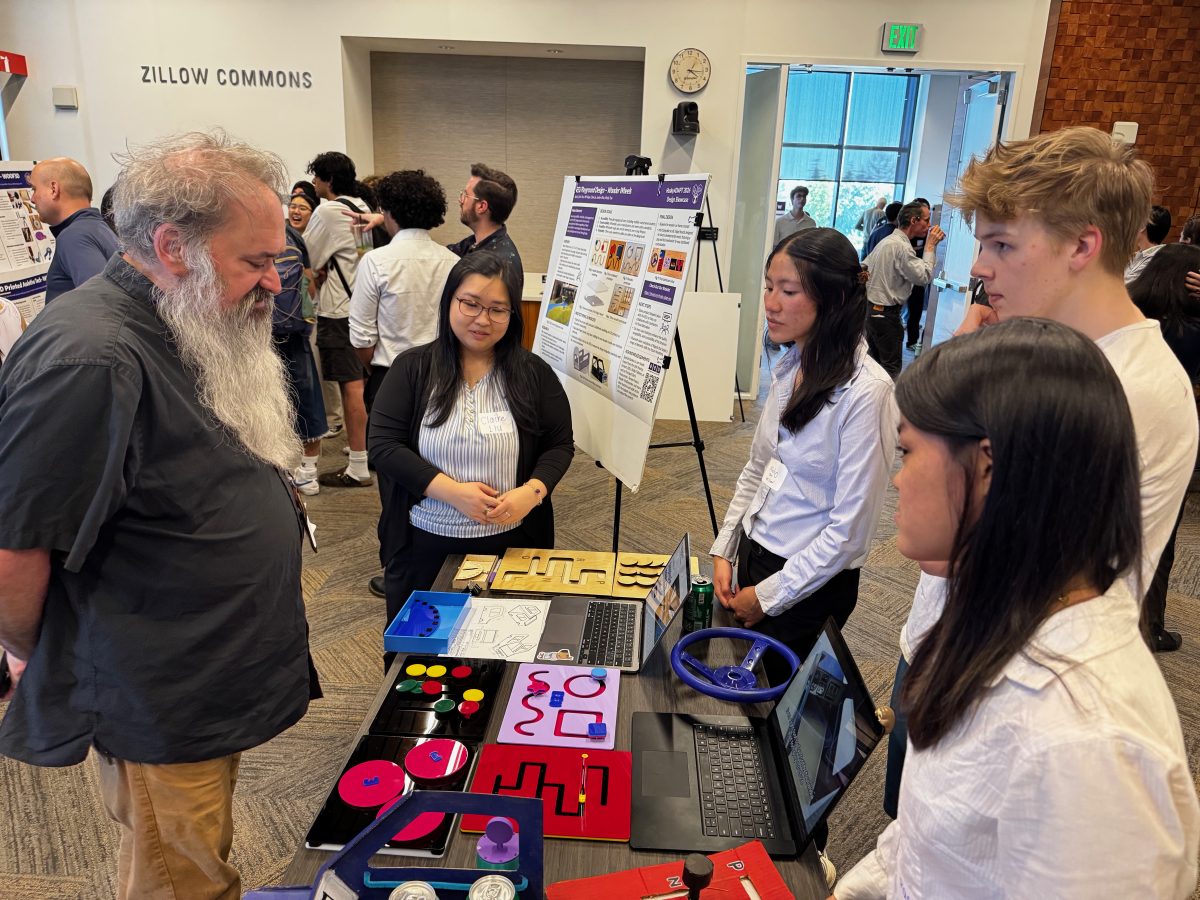
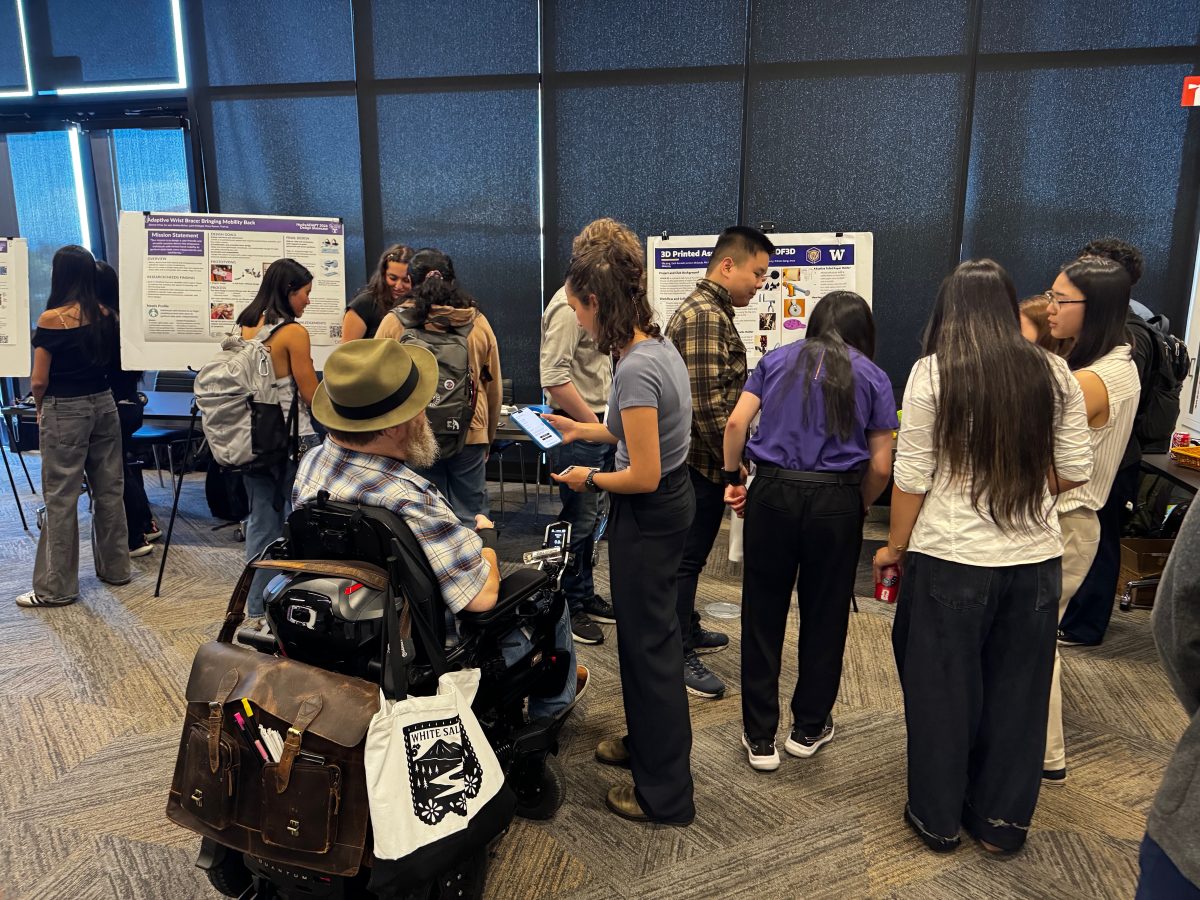
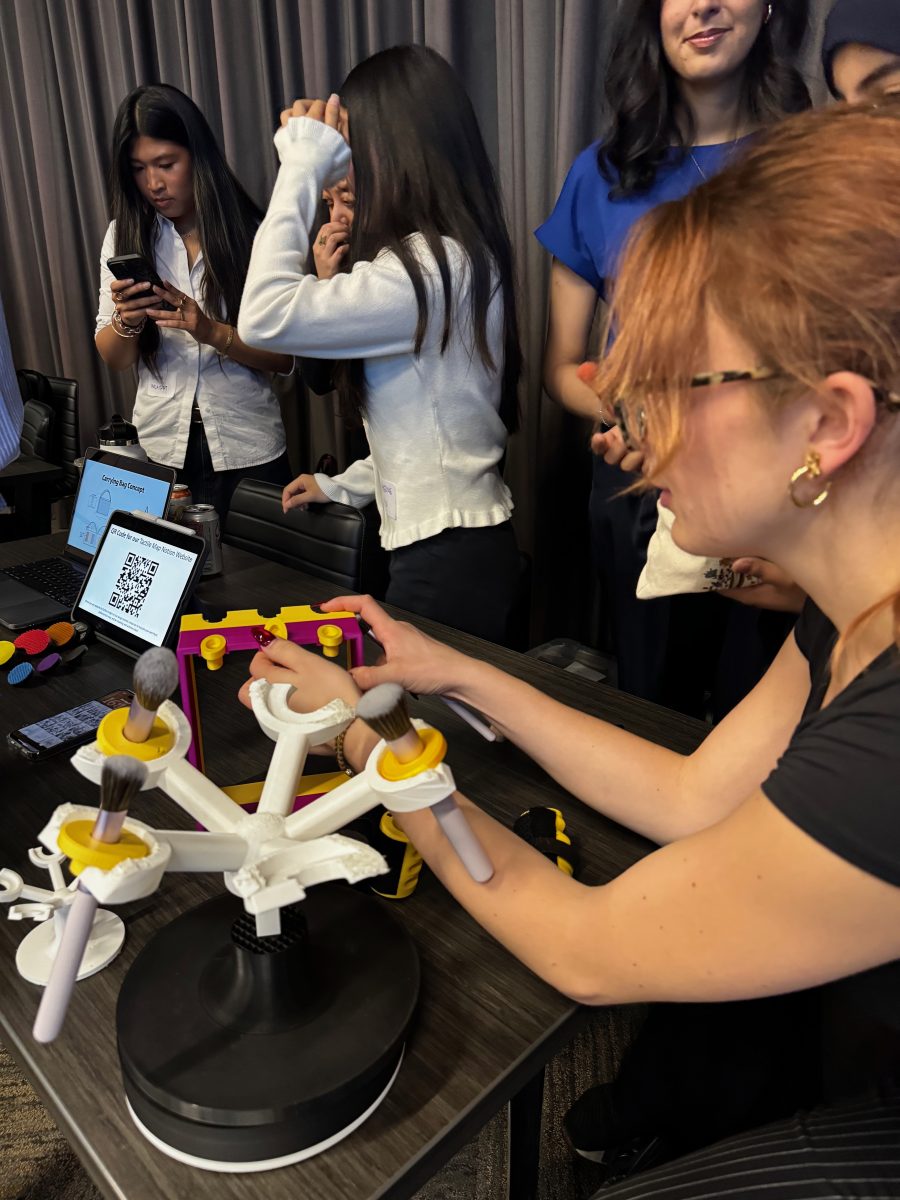
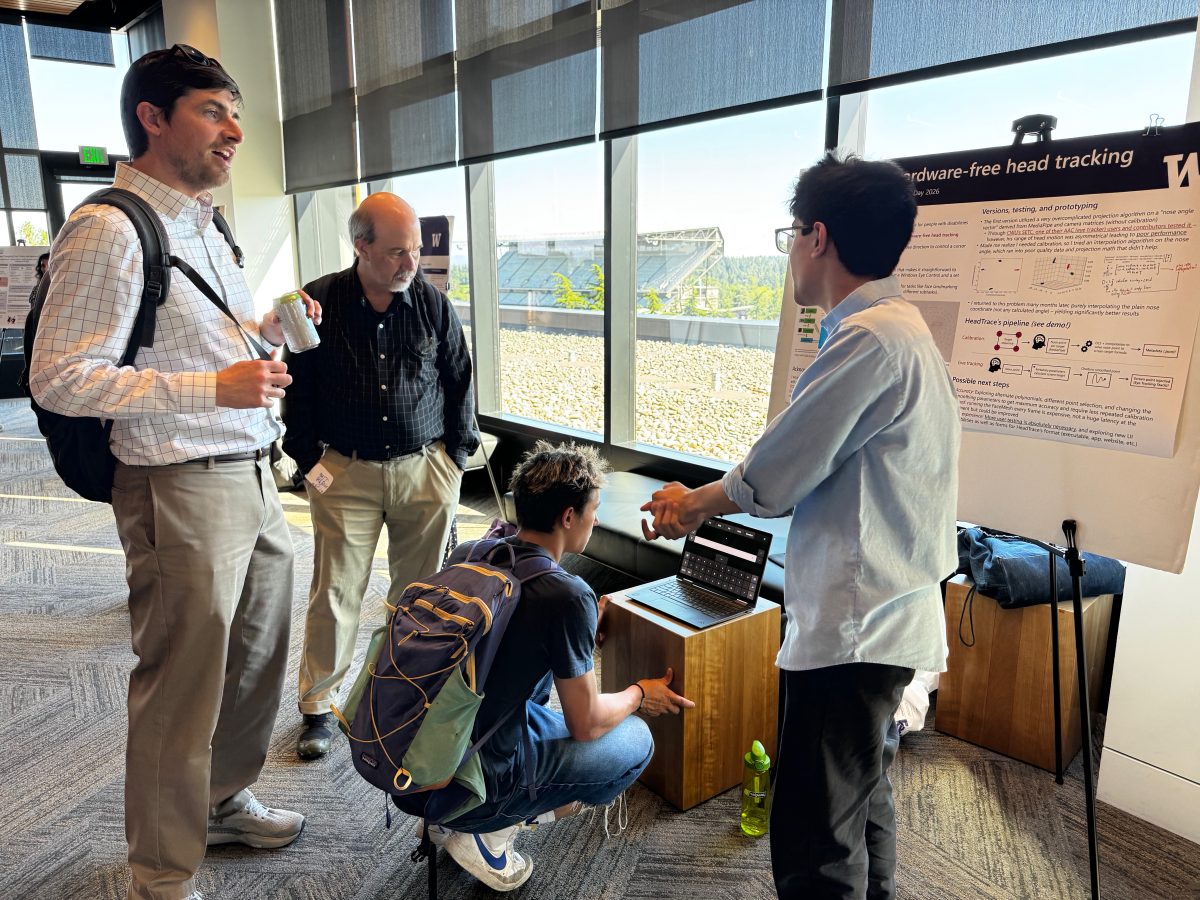
On May 27, about 150 CREATE students, faculty, and community and industry partners gathered to learn about student research on accessible technology. Co-hosted with HuskyADAPT, students presented over 25 posters and several campus parters also shared their work.
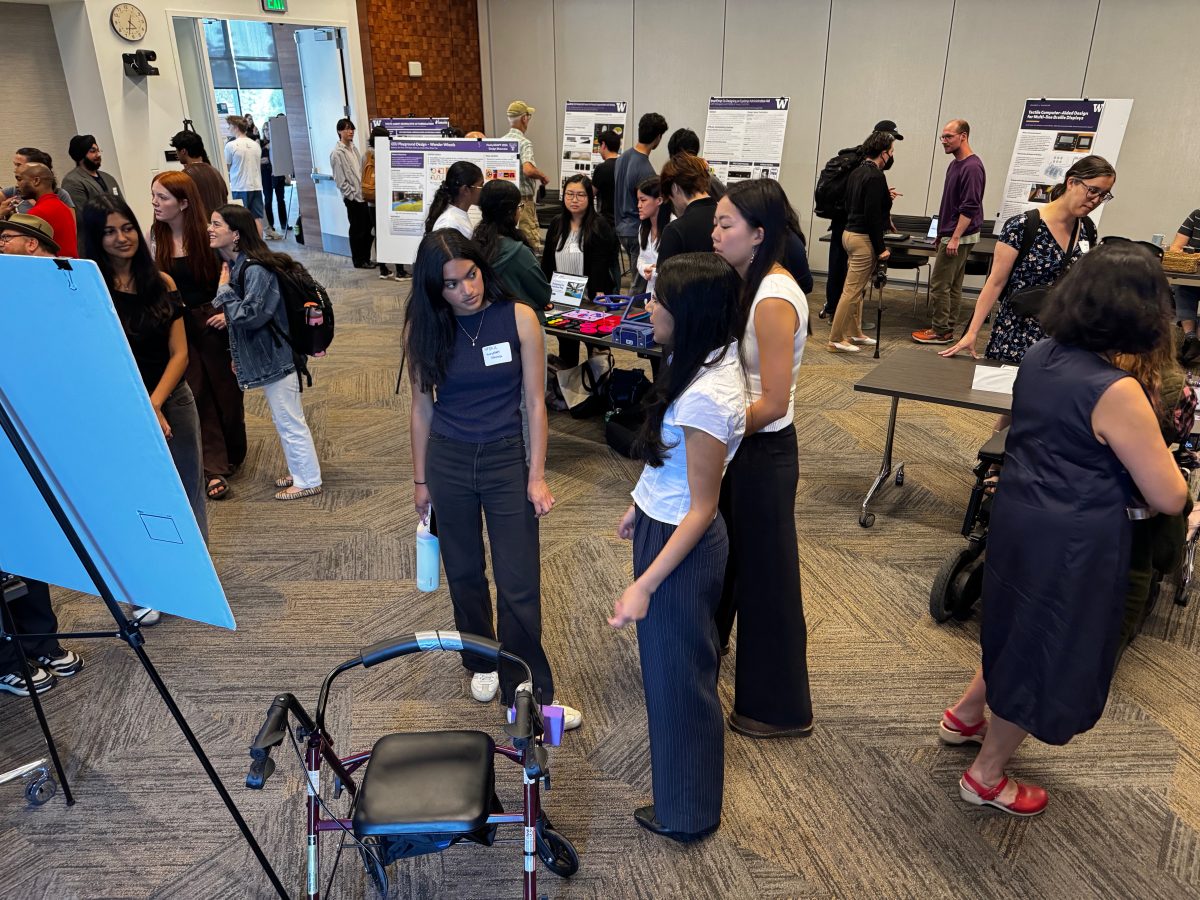
Spring 2026 Research Showcase projects
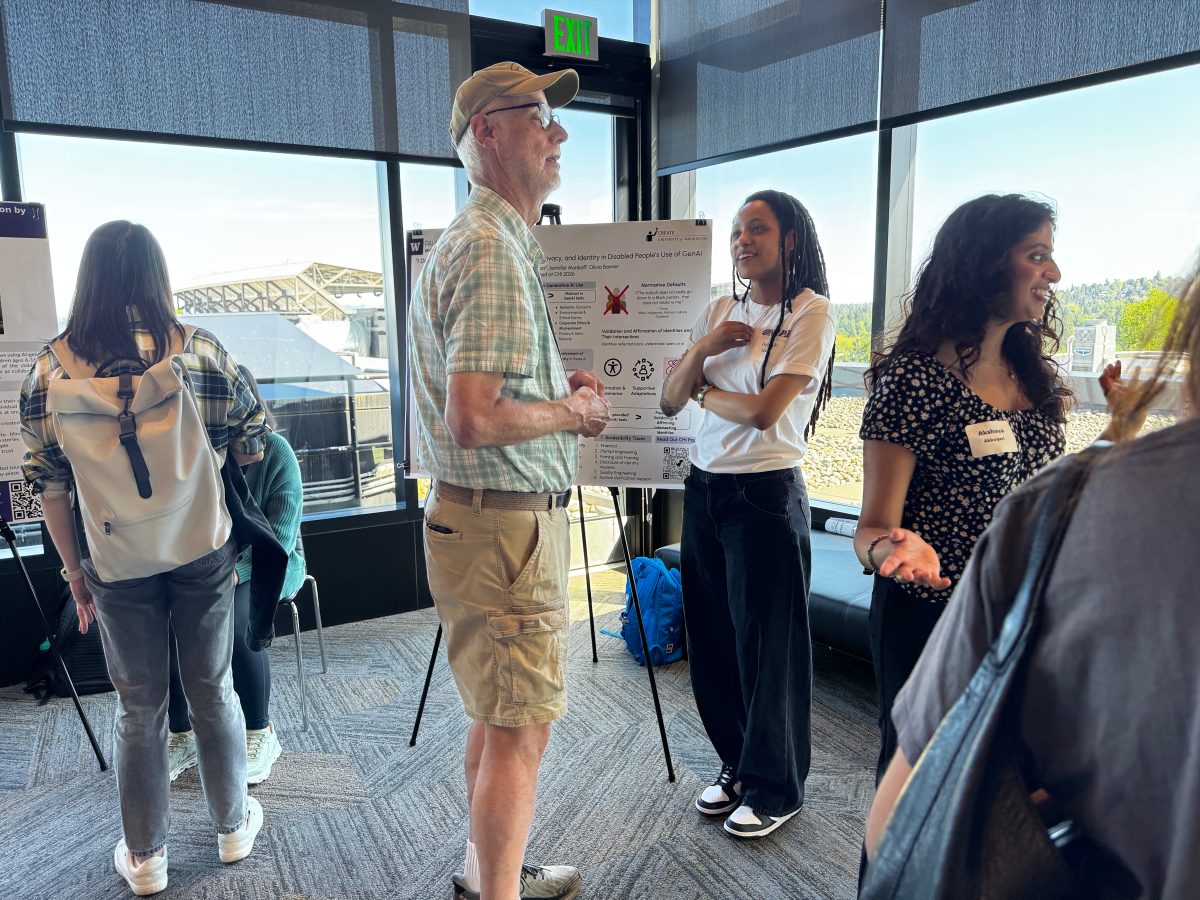
“I Don’t Trust It, But I Use It”: Navigating Trust, Privacy, and Identity in Disabled People’s Use of Generative AI
Aaleyah Lewis, Jazette Johnson, Jennifer Mankoff, Olivia Banner
As GenAI becomes embedded in everyday technologies, it offers both new accessibility opportunities and risks for disabled people. However, little is known about how disabled people navigate GenAI in daily life, particularly how trust, privacy, and intersectional identities shape these experiences. Drawing on seven cross-disability focus groups (N=20), we reveal three key findings: negotiating GenAI use amid mistrust, identity-based benefits and tensions, and amplified accessibility taxes.
Learn more: “I Don’t Trust It” Powerpoint presentation
“It Removes That Level of Your Own Thinking”: How Students with Learning Disabilities Perceive Generative AI Tools in Education
Alisha Bose
This study examines how college students with learning disabilities perceive, use, and evaluate generative AI tools. It combines participant feedback with technical evaluations of AI-generated summaries, highlighting differences in readability, fidelity, and trust across tools and content types.
Learn more: “It Removes that Level…” Google Doc | “It Removes that Level…” Canva poster
Accessible Makeup
Samantha Scalia, Grace Zhang, Sahini Komandla, Ashlie Latta, Dhreeti Taneja, Alaa Alben Saleh
People with C5-C6 spinal cord injuries and upper-extremity motor impairments often experience limited dexterity and strength in their extremities and an impaired range of motion; this significantly restricts their ability to independently use conventional cosmetic tools. Current products and applicators are typically designed for users with full motor control, creating barriers to independent use for individuals with spinal cord injuries and other extremity impairments. This project’s main objective is to design user-centered and affordable cosmetic tools that support independent applications for people that live with and experience upper extremity impairments.
Learn more: Accessible Makeup PDF presentation
Adaptation for All: Grassroots Instructional Systems
Jordan Cheung, Spencer Hensley, Avik Spurgeon, Charlotte Parry, Maria Nguyen, Uyen Vuong
Toy adaptation instructions increase access to play opportunities for children with disabilities, but existing resources are often difficult to find, inconsistent in quality, and inaccessible to many users. During winter quarter, our team developed user-centered instructional materials, then shifted toward broader systems analysis surrounding barriers within existing DIY assistive technology ecosystems. Moving forward, we aim to conduct community-informed research and build partnerships with existing organizations to better understand user needs, organizational challenges, and opportunities for scalable instructional design interventions that support caregivers, educators, clinicians, and community members in confidently adapting toys.
Learn more: Adaptation for All PDF document
AI For Deafblind
Keisuke Kamahori, Jonathan Chu, Raymond Tsai, Rio Kisna, Rizal Rinaldi, Anthony Chou, Shih-Lien (Linus) Lu, Kim-Fu Lim, Manila Kristin, Sarah Chu
Developing cheaper ways to help the deafblind communicate using AI.
AI-Augmented Storytelling for Blind and Low-Vision Individuals
Arnavi Chheda-Kothary, Jon E. Froehlich, Jacob O. Wobbrock
Our goal is to understand how blind or low-vision (BLV) children currently create and share stories with sighted peers and family members, and explore how AI and multimodal technologies can support inclusive storytelling experiences. Through formative interviews and observational studies, co-design with mixed-ability groups, and system development and deployment, we aim to surface both storytelling practices and opportunities for AI to enhance those practices for BLV children.
AugPrint: 3D Printing Foam Augmentations Directly Onto Objects Using Viscous Thread Printing
Jerry Cao, Yuecheng Peng, Hongrui Wu, Yuxuan Miao, Sanjana Satagopan, Runxin Shi, Brier Hehmeyer, Brett Emery, Jeffrey Lipton, Richard Li, Jennifer Mankoff, Shwetak Patel
AugPrint uses a standard consumer 3D printer to add soft, customizable foam layers directly onto curved objects. A design tool lets users control stiffness, texture, and density across complex surfaces, and the same technique can embed pressure sensors using conductive filament. Real-world demos include a pressure-mapping bike seat and a shock-absorbing electronics enclosure.
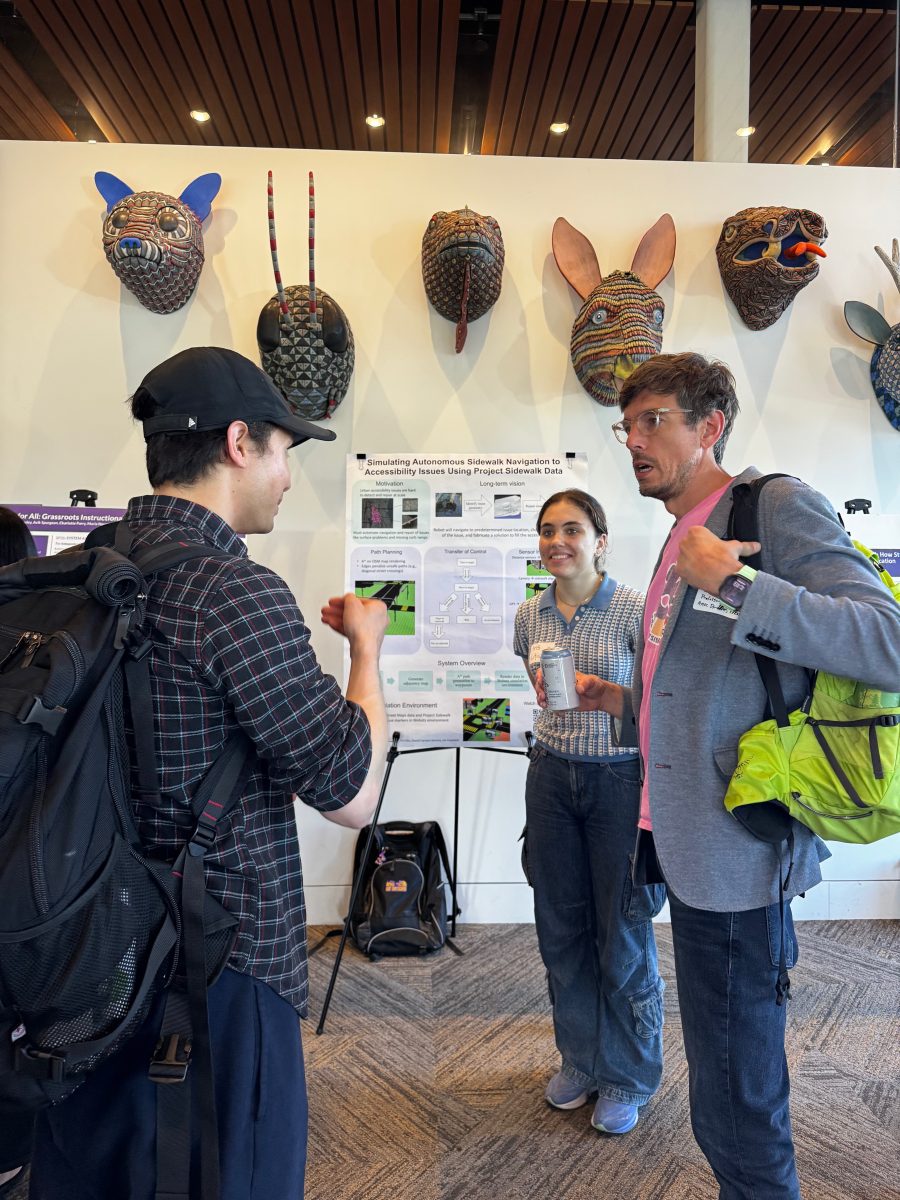
Autonomous Sidewalk Navigation to Urban Accessibility Issues Using Project Sidewalk Data
Iris Litiu, Daniel Campos Zamora, Jon Froehlich
A simulation framework for autonomous robot navigation on urban sidewalks focused on identifying and addressing accessibility issues in real-world environments. Integrates Project Sidewalk and OpenStreetMap data into simulation, combining A*-based path planning, sensor-driven obstacle avoidance, and waypoint navigation to enable reliable movement in urban environments. This work supports a broader effort to use autonomous robots for detecting, characterizing, and ultimately repairing accessibility issues.
Learn more: Autonomous Sidewalk Navigation GoogleSlides Poster
Birds Beyond Sight
Katarina Blind, Catherine Fu, Jax (Jacquelyn) Powell
The feeling of birding is for everyone, but not everyone experiences birds the same way. Building on a previous study that examined the experience of birders that are blind and low vision, the objective of this study is to bring the mindful birding-by-ear experience to all birders of all visual abilities in collaboration with Merlin from the Cornell Lab of Ornithology.
Learn more: Birds Beyond Sight PDF Poster
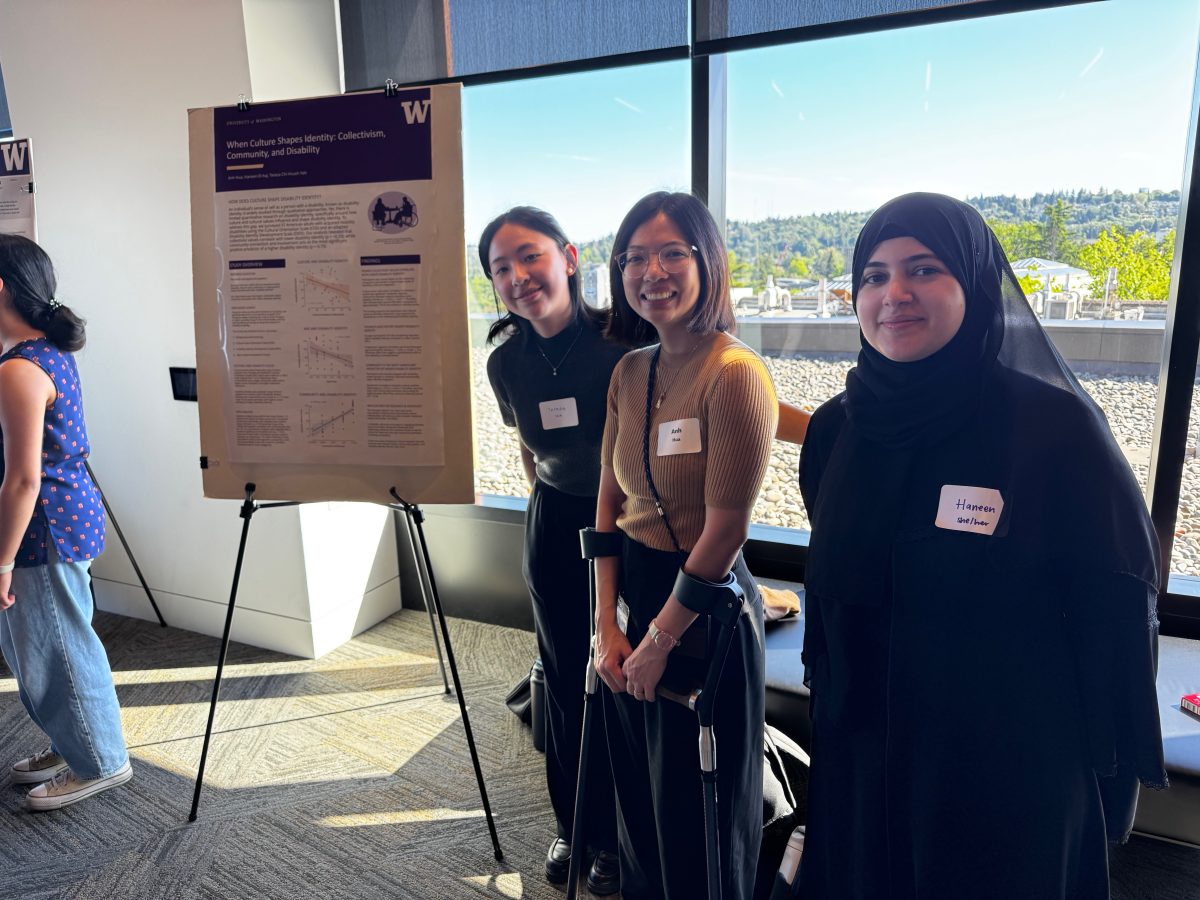
Cultural values and disability identity
Anh Hua, Haneen El-haj, Teresa Yeh
Most disability identity frameworks assume individualistic values, yet how collectivist cultural orientations shape disability identity remains unmeasured. We surveyed 37 American adults with acquired mobility disabilities and found a statistically significant negative relationship between collectivist values and disability identity – while community connection emerged as the strongest predictor of identity integration. These findings point toward a network-centered approach to accessibility design that engages families alongside individuals.
Evaluating how educators make computing courses more accessible
Mumina Guled
I examined how instructors and teaching assistants in the University of Washington’s Allen School of Computer Science experienced digital accessibility requirements ahead of the DOJ’s ADA Title II compliance deadline (originally April 2026, now extended to April 2027). The research involved semi-structured interviews with 8 instructors and 3 student TAs, exploring the barriers they face in making course content accessible, how they understand their own responsibility around compliance, and what institutional training and support has or hasn’t worked. Key findings centered on themes like ambiguity around accessibility standards, a gap between knowing a student needs accommodation and knowing how to provide it, the particular challenge of making CS-specific visual content (i.e., diagrams, code visualizations) accessible, uneven TA training, and a strong desire for centralized, platform-specific guidance tools.
HeadTrace
Tanmay Kulkarni
HeadTrace is a webcam-based, external-hardware-free head tracking solution that utilizes the Google MediaPipe FaceMesh model and Microsoft Windows Eye Control API to operate a computer hands-free. It has a host of possible applications for people with motor disabilities such as browsing, playing games, and typing. The earliest, calibration-free version has been tested by a user with mobility impairments, leading to a more robust version with calibration utilizing linear interpolation and OLS.
Learn more: HeadTrace Powerpoint Poster
IFAB: Interactive Framework for Agentic Building
Kate Glazko, Gordon Huang, Czarin De La Cruz, Hannah Star Lee, Emily Chi, Madhumitha Gandhi, Tashfia Sharmin, Mahnuum Zaheer, Adriana Schulz, Jennifer Mankoff
Generative AI has emerged as a flexible, open-ended way to specify design intent and empower personalized fabrication, but its outputs often still require validation and correction. Agentic systems provide an opportunity to combine many specialized agents that are good at very narrow tasks. We present a framework that simplifies the process of adding new agents and provides a user interface for creating test-driven systems of agents. We demonstrate the value of our framework for three design tasks with real-world need: generating embroiderable images with braille labels, creating lasercut Nordic runes, and producing 3D printable icons with custom AI imagery for reminder bracelets.
Inclusive Resume Assistant
Kate Glazko, Tamsyn Henke, Sean Benoit, Daniel Bekele, Vainavi Thakkar
To understand AI biases experienced by job-seekers, we built a tool to put de-biasing in the hands of jobseekers. The Inclusive Resume Assistant is a tool for jobseekers to get a more transparent understanding of how/if they are being biased against, and fight back against AI tools that have underlying bias. Through the use of resume modifications such as prompt injections, jobseekers are able to get resume feedback and modify their resumes.
Motion Morph: Automated Mechanism Creation for Accessible Object Adaptation
Sanjana Satagopan, Jerry Cao, Jennifer Mankoff, Shwetak Patel
Everyday objects have fixed motion inputs that are difficult to adapt on a case-by-case basis without engineering expertise. For example, turning a jar lid or opening a door requires grip strength that many individuals with limited hand mobility cannot perform. Through MotionMorph, we introduce an automated approach to generate 3D-printable mechanism adapters that convert an object’s existing motion into a desired output motion, with applications in accessibility.
Learn more: Motion Morph Powerpoint Poster
NavAble
Mumtaz Sheikhaden, Nebiat Markos, Taise Nish, Arsiema Sisay, Dev Dhawan
NavAble is an accessibility-focused campus navigation platform designed to help students, faculty, and visitors navigate the University of Washington more safely and efficiently. The project explores how personalized routing, real-time campus alerts, and accessibility infrastructure data such as elevators, ramps, entrances, and construction updates can improve mobility for individuals with diverse accessibility needs. Through research and stakeholder collaboration with UW departments, NavAble aims to create a more inclusive and reliable campus navigation experience.
Priorities & Preferences of Adults with Spinal Cord Injury for Exoskeleton Walking
Annika Pfister, Siena Villancio-Wolter, Kimberly A. Ingraham
This study explores the perceptions and experiences of adults with a spinal cord injury regarding exoskeletons for walking. Through interviews and focus groups, we aim to better understand the relationships between lived experiences, exoskeleton features, and user priorities.
Learn more: Exoskeleton Walking GoogleSlides Poster | Exoskeleton Walking PDF Poster
SmartDrop: Co-Designing an Eyedrop Administration Aid with Participants with Motor or Visual Disabilities
Jerry Cao, Ruiqing Wang, Yuecheng Peng, Sam Wong, Richard Li, Jennifer Mankoff, Shwetak Patel
SmartDrop is an assistive device designed to help people with disabilities self-administer eyedrops more reliably, using motor-driven actuation, camera-based alignment guidance, and real-time success detection. Developed through co-design sessions with disabled eyedrop users and healthcare professionals, it addresses key gaps left by existing aids, including steep learning curves and uncertainty about whether drops were successfully delivered.
Tactile Computer-Aided Design for Multi-Line Braille Displays
Carlos E. Tejada, Felix Hähnlein, Arun Mankoff-Dey, Gilbert Bernstein, Joshua Miele, Adriana Schulz, Jennifer Mankoff
Computer-Aided Design (CAD) is important for design, engineering and fabrication. However, 3D CAD environments are largely designed for visual users and inaccessible to non-sighted users. The goal of this project is to rethink 3D CAD design for multi-line braille displays.
Unseen City Canvases: Exploring Blind and Low Vision People’s Perspectives on Urban and Public Art Accessibility
Lucy Jiang, Amy Seunghyun Lee, Jon E. Froehlich, Leah Findlater
Although public art can hold cultural, social, political, and aesthetic significance, it remains largely inaccessible to blind and low vision (BLV) people. Through interviews and design explorations, BLV participants highlighted challenges distinct to urban art contexts: safety took precedence over art exploration, multisensory access measures could be disruptive to others in the public space, and inaccurate AI descriptions could risk cultural erasure. Our work shows that making urban and public art accessible requires more care than simply combining existing approaches from art access and urban access work.
Learn more: Unseen City Canvases Google Doc
Walker Proximity Sensor
Leo Andrade, Inchara Chetan, Thy Dinh, Chelsea Hom, Panav Kotha, Hongyi Mei, Rutvi Pota
Our team designed a walker-mounted proximity sensing system that helps individuals with Autism Spectrum Disorder (ASD) navigate crowded environments more independently and safely. By utilizing ultrasonic sensors, the device detects nearby people and provides gentle haptic vibration alerts when someone is too close. This discreet, detachable system aims to reduce collisions while promoting independence and confidence for walker users in dynamic public spaces.
Wonder Wheels: A Playground Evolution for All Abilities
Rachel Li, Ben Chua, Jordyn Ohta, Will Hippe, Claire Liu, Mindy Tran
This research focuses on developing an inclusive, vehicle-inspired playground structure called “Wonder Wheels” to promote cooperative play among students with diverse physical and developmental abilities. Developed in collaboration with the Experimental Education Unit (EEU), the design utilizes an open-back, ground-level layout and side railings to ensure full accessibility for children using wheelchairs and walkers. By integrating interactive elements like a gear shift and speedometer, the project aims to improve fine motor skills and foster social interaction with minimal adult assistance.
Learn more: Wonder Wheels PDF Poster
Wrist Brace
Macy Parson, Ivy Lee, Luke Schlegel, Anisha Rahut, Sienna Moss, Tran Le
We made an adaptable wrist brace for people with limited hand dexterity. It is used so people can live more independently and have access to everyday tools like silverware, hairbrush, toothbrush, stylist, etc. and use them with limited assistance.
For presenters
Presenters, please take note:
Poster and digital file
You are responsible for printing your poster and submitting an accessible digital file to CREATE.
- Accessible digital poster:
- Ideally, start with the UW Accessible poster template.
- Refer to the UW Accessible documents guidelines.
- If your project is supported by CREATE, make sure to credit us on the poster: CREATE logo files.
- Submit files as instructed by Kathleen Quin Voss (check your email).
- Printed poster for presenting at the showcase:
- Check with your advisor and school/department about assistance with printing research posters.
- Large-format printing services include: FedEx (may be less expensive) and UW Printing Services.
- We’ll provide the easel, backer board, and clips.
Project description
A description for the event web page, including:
- Project title
- 1-3 sentence project description using plain language
- Point of contact
- List of all team members
Optional media
- A link to a short video of your demo or project presentation
- Web page links
- GitHub links
Presenter
Make sure you will have a representative with your project for the duration of the event (it does not need to be the same person for the whole time).
Email Kathleen Quin Voss, CREATE Community Engagement and Partnerships Manager