June 5, 2025
On May 28, CREATE student and faculty researchers gathered with industry and community partners to discuss concerns about and approaches to sustainable accessibility research. Two hybrid panel discussions covered timely topics, followed by research presentations from CREATE students and the CREATE-HuskyADAPT Research Showcase.
Thank you to all who attended Community Day and to our community partners and panel members for lively, informative conversations!

Learn about this year’s Community Day and Research Showcase events and subscribe to the CREATE mailing list for updates on accessibility research.
2025 panel discussions
This year, our panel discussions focused on current legal challenges to access and rights and explore how accessible technology research makes it from the lab to the real world. The panels were followed by our annual Research Showcase, co-sponsored by HuskyADAPT, an energetic and enthusiastic sharing of the outstanding work being done in the field of accessible technology here at the UW.
Panel 1: Technology, Access, and the Law
With CREATE Director for Education Mark Harniss moderating, speakers Jonathan Lazar and Lee Tremblay started with the positives of federal rules and laws already in force and difficult to officially roll back.
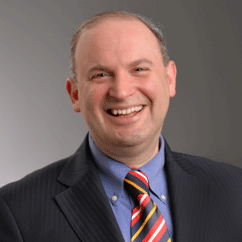
Jonathan Lazar is a professor in the College of Information at the University of Maryland and is the executive director of the Maryland Initiative for Digital Accessibility and a faculty member in the Human-Computer Interaction Lab. Lazar focuses on technology accessibility for people with disabilities, user-centered design methods, assistive technologies, and law and public policy related to HCI. He has been a CREATE Advisory Board member since 2020.

Lee Tremblay will join the Center for Reproductive Rights in July as a Litigation Fellow. Lee was a Justice Catalyst Fellow at Legal Voice, a Pacific Northwest organization fighting for gender liberation, working at the intersection of disability and reproductive justice in Idaho. Lee has a J.D. from Georgetown University Law Center, where they were President of the Disability Law Student Association and published in the Georgetown Law Technology Review.
While it’s unclear whether federal rules will be enforced, at the state and local levels, there is hope for sustained research and protections. The speakers noted ample opportunity to get involved and make a difference, including running for library and school boards and in local, regional, and state offices.
These publications were recommended by Lazar:
- The potential role of US consumer protection laws in improving digital accessibility for people with disabilities. Lazar, J. (2019). U. Pa. JL & Soc. Change, 22, 185.
- The Disability Tax and the Accessibility Tax: The Extra Intellectual, Emotional, and Technological Labor and Financial Expenditures Required of Disabled People in a World Gone Wrong… and Mostly Online. Olsen, S. H., Cork, S., Anders, P., Padrón, R., Peterson, A., Strausser, A., & Jaeger, P. T. (2022). Including Disability, 1, 51-86.
Panel 2: Translation: Bringing Research into the World
Moderator Dr. Mary Goldberg opened the conversation with a question for panelists on what motivated them to get involved in research focused on people with disabilities. It was striking how influential personal experiences and core values were the primary factors mentioned.
Our panelists were chosen based on their expertise and success in translating accessible research; they shared their websites for helpful resources and information:
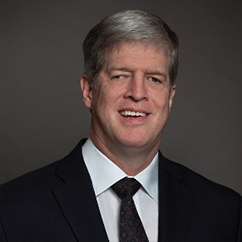
Kirk Adams, Managing Director at Innovative Impact: “We strive to accelerate the inclusion of people with disabilities in the workforce.” Adams also leads the Apex Program, which works to launch blind people in national security.
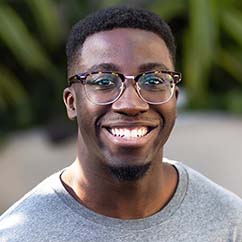
Michael Bervell, founder and CEO at TestParty: “TestParty automatically scans source code to create more accessible websites, mobile apps, images, and PDFs – all while reducing risk and supplementing in-house or manual vendor audits.”
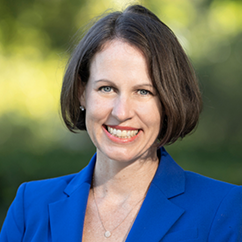
Mary Goldberg, Co-Director at IMPACT Center: “Assistive technology ideas, research, and development can take on different forms, and encompass commercial products, clinical standards and guidelines as well as freeware. So wherever you are in the process, the IMPACT Center can assist you on your journey.”
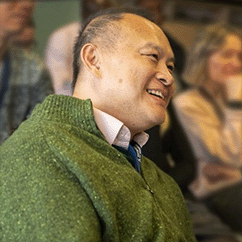
Wilson Ng is a professor of entrepreneurship and Director of the Chair in Entrepreneurship & Disability at IDRAC Business School in Lyon, France. Ng is also an investment advisor at Crowd for Angels, “a UK crowdfunding platform that offers companies and investors opportunities to raise and invest funds in different projects. Our crowdfunding opportunities include shares (equity) and crowd bonds (debt).”
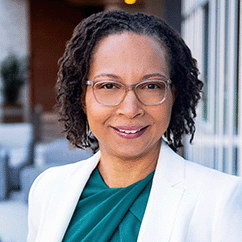
Michele Williams is the owner and Accessibility Consultant of M.A.W. Consulting: “We are on a mission to ensure that every facet of your organization not only meets accessibility compliance standards, but also champions diversity and inclusivity at its core. Think of us as your one-stop-shop for accessibility consulting.”
Questions?
Contact us at: kqvoss@cs.washington.edu