Community Partner Spotlight: Open Doors for Multicultural Families
CREATE Community partner Open Doors for Multicultural Families (ODMF) supports multicultural and underserved communities, including individuals with intellectual and developmental disabilities (IDD) and their families.
ASSETS 2026: CREATE Papers, Presentations and Demos
August 31, 2026
CREATE faculty, students, and alumni will present their research at ASSETS 2026 in Porto, Portugal this October.
Posters and demos are still being added. Let us know if we missed anything.
Awards
Wobbrock to receive the 2026 SIGACCESS Award for Outstanding Contributions to Computing and Accessibility
Congratulations to Jacob O. Wobbrock on receiving what's considered the "lifetime achievement" award for accessibility research! As the award cites, "Since 2001, his research has pursued accessible interaction techniques, adaptive user interfaces, mobile accessibility, and human-centered artificial intelligence." He'll receive the award at the annual ASSETS conference this fall.
Honorable Mention: Tobias M Weinberg, Aaleyah Lewis
Weinberg and Lewis (CREATE Ph.D. student) are co-authors of Me, Myself, and My Voice: Exploring Cultural and Linguistic Identity in AAC AI-generated Voices. Full author list: Tobias M Weinberg, Aaleyah Lewis (CREATE Ph.D. student), Ricardo E. Gonzalez Penuela, Weicong Hong, Jennifer Mankoff (CREATE Director), Thijs Roumen.
CREATE's impact on educating accessibility leaders is reflected by awards to our students, leaders, faculty and alumni. Congratulations to all!
Papers authored by CREATE students, faculty, alumni
A Scoping Review of Human–Computer Interaction Research on the Accessibility of Data Visualizations: New Technologies, Procedures, and Designs
Saad Hassan, Areen Khalaila, Dylan Cashman, Ather Sharif (CREATE Ph.D. 2024), Rebecca Faust
Accommodation Negotiations: Modeling the Privacy and Access Risks of Accommodation Requests by Disabled Professionals at Academic Conferences
Jay Rodolitz, Caren Chung, Saan Similien, Megan Hofmann (CREATE Ph.D. 2022)
Bespoke Visual Assistance: What and How do Blind and Low-Vision People Create with Agentic Programming?
Ellie Seehorn (CREATE undergraduate research intern 2022), Gene S-H Kim, Aziz N. Zeidieh, Ather Jammoa, Kunyeul Lee, Aditi Shah, Jaylin Herskovitz, Anhong Guo, Venkatesh Potluri (CREATE Ph.D. 2024)
"Catching lightning in a bottle": How Blind or Low Vision Creators Navigate Ideation Across Creative Domains
Mingyi Li, Yutian Shi, Cynthia L Bennett (CREATE Ph.D. 2020), Maitraye Das (CREATE Postdoctoral Researcher 2022-23)
Chronic Access: Understanding the Accessible Technology Practices of People with Chronic Health Disabilities
Emma J McDonnell (CREATE Ph.D. 2024), Tae E. Jones, Wanda Pratt (CREATE faculty member)
ColorA11Y: Enhancing Creative Design Workflows with Just-in-Time Color Accessibility Recommendations
Alexa Siu, Rajiv Jain, Abhinav Kannan, Jose Echevarria, Mary Ann (MJ) Jawili, Yalpi Shiva Prasad, Rick Treitman, Garreth W. Tigwell, Jonathan Lazar (CREATE Advisory Board member)
Compounded Access: How Chinese Neurodivergent Students and Professionals Navigate English as a Second Language
Qiushi (Anya) Liang, Rudaiba Adnin, Maitraye Das (CREATE Postdoctoral Researcher 2022-23)
Context-Aware, AI-Powered ALT Text Generation for Lecture Visuals: A Multimodal Approach via Slide Decks and Speech Transcripts
Aybala Turkarslan, Vainavi Hemalbhai Thakkar, Rodas Tekle, Thomas Chen, Jesse J Martinez (CREATE Ph.D. graduate), Jennifer Mankoff (CREATE Director)
Fluctuating Access: How Parents and Teachers Support Learning for Children with Cerebral Visual Impairment
Maitraye Das (CREATE Postdoctoral Researcher 2022-23), Abir Saha
From Compliance to Creativity: A Longitudinal Study of How Accessibility Constraints Impact Early-Career, Small-Company Mobile Designers
Anisa Callis, Sarah Andrew, Maya Lane, Garreth W. Tigwell, Anne Spencer Ross (CREATE Ph.D. 2021)
Sociotechnical Tensions in Navigating a New Disability: Credibility, Coordination, and Identity
Wenhan Xue, Kelly Ramos Pereira, Taniyah Hicks, Maitraye Das (CREATE Postdoctoral Researcher 2022-23), Vinitha Gadiraju
Negotiated Adoption of Health Sensing Systems: A Co-Design Study with Older Adults and Family Members
Ruowen Niu, Fan Lin, Ziyang LIU, Kaishun Wu, Rachel L. Franz (CREATE Ph.D. 2024)
Opportunities for AI-Enhanced Visual Story Creation by Blind and Low-Vision Children
Arnavi Chheda-Kothary (CREATE Ph.D. student), Jon E. Froehlich (CREATE associate director), Jacob O. Wobbrock (CREATE associate director)
Prompt and Circumstance: Evaluating Accessibility in LLM-Generated HTML Form Components
Yumeng Ma (CREATE Ph.D. student), Jacob O. Wobbrock (CREATE associate director), Joe Devon, Aaron Gustafson, Michael Fairchild, Jennifer Mankoff (CREATE Director), Venkatesh Potluri (CREATE Ph.D. 2024)
Querying Multimodal Scientific Papers with AI: Practices and Preferences Across Blind, Low-Vision, and Sighted Scientists
Arnavi Chheda-Kothary (CREATE Ph.D. student), Lucy Lu Wang (CREATE faculty), Joseph Chee Chang, Jonathan Bragg
Synthesizing and Evaluating a Visual Feedback Framework for Accessible Content Creation
Lotus Zhang (CREATE Ph.D. graduate 2026), Anh Hua, Leah Findlater (CREATE associate director)
Towards Accessible AI Literacy: Investigating How Teachers of Blind and Low-Vision Students Integrate Generative AI in Pedagogical Practices
Rudaiba Adnin, Abir Saha, Maitraye Das (CREATE Postdoctoral Researcher 2022-23)
What to Distinguish and How? Opportunities and Challenges of Augmenting Multiple, Cluttered Objects in Complex Scenes for People with Low Vision
Yuheng Wu, Ruijia Chen, Jaewook Lee (CREATE Ph.D. student), Jia Li, Kexin Zhang, Mengfong Lio, Weibing Wang, Sanbrita Mondal, Jon E. Froehlich (CREATE associate director), Yapeng Tian, Yuhang Zhao
AccessMap expands beyond the sidewalk
September 21, 2026
AccessMap is an open-source pedestrian navigation platform that provides customized directions for people looking to avoid access barriers such as hills, construction sites, and high-clearance curbs. To prepare for thousands of FIFA World Cup fans visiting Seattle this summer—including many with disabilities—AccessMap researchers expanded the tool to include event-specific guidance.
A pin is not enough
Unlike typical mapping apps, AccessMap lets each user set a personal profile: a blind or low-vision user can dial in exactly how much detail they want at a given moment, while a wheelchair user can set the maximum incline or curb height they're willing to navigate. The app then routes around what doesn't work for that person, not just what's fastest.
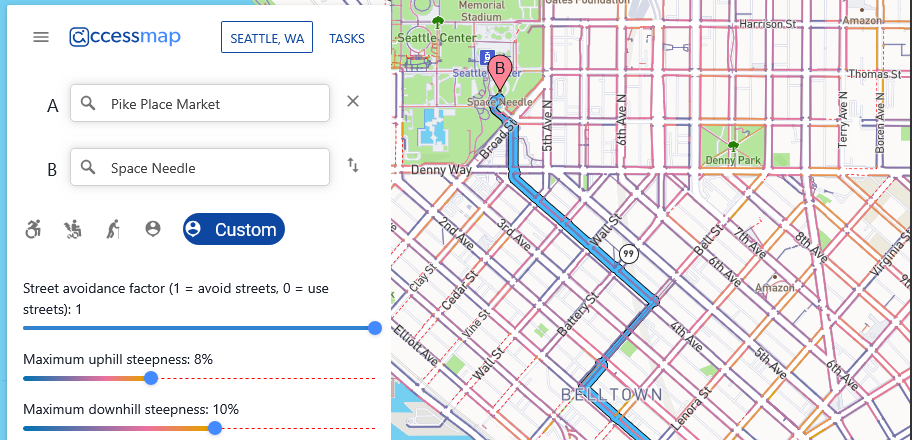
AccessMap is developed by the UW Taskar Center for Accessible Technology (TCAT), a CREATE campus partner led by CREATE Associate Director Anat Caspi.
World Cup customization: Details that matter
The TCAT team built a custom version of AccessMap for the World Cup that pushed this idea into stadiums, fan zones, and the local businesses around them. Instead of stopping at "here's the building," it mapped the last few meters: which entrance to use, whether there was enough clearance to get through it, and whether the door swung in or out. That level of detail matters enormously to disabled visitors, who often lose the most time and independence not on the route to a destination, but in the final approach to it.
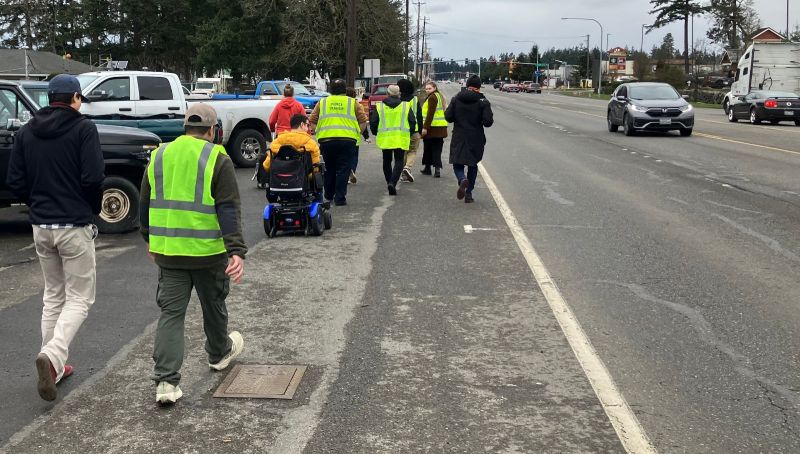
Through manual, on-the-streets validation by hundreds of volunteers, the AccessMap research team ensured that the maps would reflect the construction and pavement conditions that soccer fans would encounter during the matches.
AccessMap was also built directly into SEA&WIN, Seattle's official FIFA World Cup companion app, so fans could navigate between venues without switching to a mass-produced map. That mattered as much for what it avoided as for what it added: an open-source alternative that adapts to how each visitor moves through a city, rather than a one-size-fits-all map.
Permanently expanded
“We realized that every major event and every community has important local knowledge that doesn't exist in a standard navigation system,” said Kunal Mehta, TCAT's project manager and a researcher focused on the non-visual experience.
“Rather than building a one-time custom solution, we expanded AccessMap so it could support locally curated enhancements layered onto a common, open pedestrian data platform," continued Mehta. From his perspective, personalization is what turns a map into something genuinely usable: the same city is described differently depending on who is asking and what they need to know.
So now, with the matches over, Seattle travelers continue to use the enhanced information.
An ongoing conversation
The philosophy of continuous, community-driven mapping takes center stage at the Taskar Center's annual OpenThePaths Conference, which brings together elected officials, city leaders, transit representatives, and residents to share ideas, challenge assumptions, and shape the future of participatory design.
"The best cities aren't designed once," says Caspi. "They are continually improved through conversation with the people who use them every day."
This article was heavily excerpted from “Cities as Conversations: The Lasting Legacy of Seattle World Cup and AccessMap's Integrated Pedestrian Mapping System,” written by Lia Chon and published by https://www.seattlefwc26.org/, July 31, 2026. Note that the article incorrectly refers to Kunal Mehta's last name as Shah.
Amy Ko Joins CREATE Leadership
July 7, 2026
We are happy to announce that Amy J. Ko has joined CREATE leadership as Director of Education.
Dr. Ko studies equitable, liberatory learning about computing and information in schools and beyond. Her work draws from human-computer interaction, computing education, software engineering, programming languages, learning sciences, behavioral sciences, sociology, and more.
Ko has supported the AccessComputing team in broadening participation in computing by students with disabilities, fostering supports and awareness about access needs. She co-edited Teaching Accessible Computing, a book that supports computing educators in teaching about accessibility in computer sciences classes, read by tens of thousands of educators globally. And she has co-designed new access technologies, including more accessible educational programming languages.
In her role as an associate dean, she works to make systems changes at the UW for more accessible digital content, less ableist teaching, and more disability justice-focused learning about computing and information.
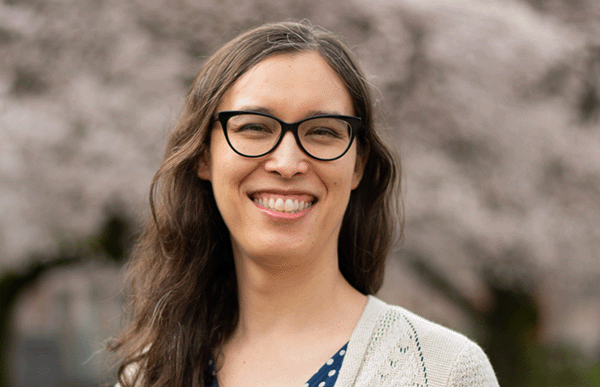
Dr. Amy J. Ko
Professor and the Associate Dean for Academics at the UW Information School, with a courtesy appointment at the Allen School.
CREATE faculty member since 2021.
"In my current role as the Information School's Associate Dean for Academics, I have the privilege of creating spaces for learning of all kinds about information. And in my new role as Director of Education for CREATE, I hope to do the same, creating new spaces for learning about accessibility, disability, and accessible computing technologies."
Amy Ko, CREATE Director of Education
While she does not yet identify as disabled, Ko emphasizes the word "yet," knowing that abilities change throughout our lives and how we communicate with others and access the world changes as well. "I've tried to channel that perspective into accessibility advocacy over the past decade," says Ko.
With CREATE, Ko hopes to extend this allyship further — for the broader region, country, and world — and encourages anyone to reach out to her for conversation about how to build more accessible futures. "Reach out and let's chat!" Ko encourages.
Feldner Provides Expertise, Perspective on "Smart" Wheelchairs
July 14, 2026

In a recent IEEE article shared by UW News, CREATE Associate Director Heather Feldner provided her expertise on the possibilities of self-driving wheelchairs — powered mobility devices that are not currently designed or readily customizable for the diverse needs of individuals with disabilities.
Smart wheelchairs are just becoming available for purchase. Starting at about $3,300, these powered mobility devices offer app-based remote steering, automatic folding, and a learning mode for first-time users. Other features, including cruise control and LiDAR-based collision avoidance, vary among models.
Dr. Feldner notes that it’s only a matter of time before smart wheelchairs with self-driving capabilities are ready to be sold to people with disabilities.
“I would say the world has to be ready because there are a lot of people who can benefit from semiautonomous or more fully autonomous devices,” Feldner says. “If we’re having that conversation about cars, and the cars are starting to come, there’s no reason why we shouldn’t be having similar conversations about personal mobility devices.”
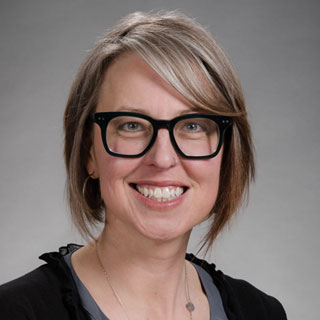
Heather Feldner is a physical therapist, an associate professor in the Department of Rehabilitation Medicine, and core faculty in Disability Studies. She directs the IMPACT Collaboratory, an interdisciplinary lab that partners with children and families to conduct research and develop technology designs that encourage accessibility, mobility and play, inclusive design, participation and health, and low to high-technology solutions.
An unfair marketplace for disabled users
Feldner notes that direct-to-consumer technology can perform a useful end-run around the inflated prices associated with healthcare-related equipment.
“Unfortunately, we are driven by a system where anything that’s labeled as specialty or healthcare-related equipment has a much higher cost involved,” Feldner says. “And the way that is paid for is largely out of the hands of the people that are needing the equipment. So, in a way, it’s great for a consumer to have the ability to say, ‘This is technology that I need to do what I want to do in the world, and I can access it without going through those channels.’
“But for folks who don’t have the socioeconomic means to do that,” she continues, “They’re still left behind. There have been a lot of creative ways that people have dealt with that—like through crowdsourcing for funding or through advocacy and lobbying for things to be covered. But that regulatory piece is challenging, I think, not just for smart wheelchairs but for a lot of equipment that could benefit people with disabilities.”
This article was excerpted from the IEEE Spectrum article, "Two New Wheelchairs Reveal What `Smart' Really Means Today: App-controlled chairs are not the same as self-driving ones."
Johnson, Glazko and Zhang highlighted for work on AI research for people with disabilities
July 1, 2026
Seattle’s Komo news highlighted the research of three CREATE researchers using AI to improve the lives of people with disabilities.
Interviewed were Jazette Johnson, Kate Glazko, and Zhuohao (Jerry) Zhang.
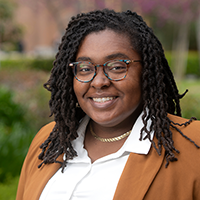
Dr. Jazette Johnson, a postdoctoral research fellow working with CREATE Director Jennifer Mankoff, studies the use of AI by people with cognitive impairment. She sees people asking AI tools like ChatGPT to interpret complex medical information. Without the context of the person’s health history or the training to present information at the right level, AI tools are more likely to confound than to clarify. Johnson has created a system that provides boundaries: it helps the patient understand a lab result but sends them to their doctors for diagnoses and complicated information. Her goals include having the patient information for context and accuracy, and also using AI to simplify the complex language that often appears on online patient portals and charts.
"It is important that we do not pause in development and engagement but also bring caution when we are presenting various things."
Dr. Jazette Johnson, Allen School Postdoctoral Research Fellow
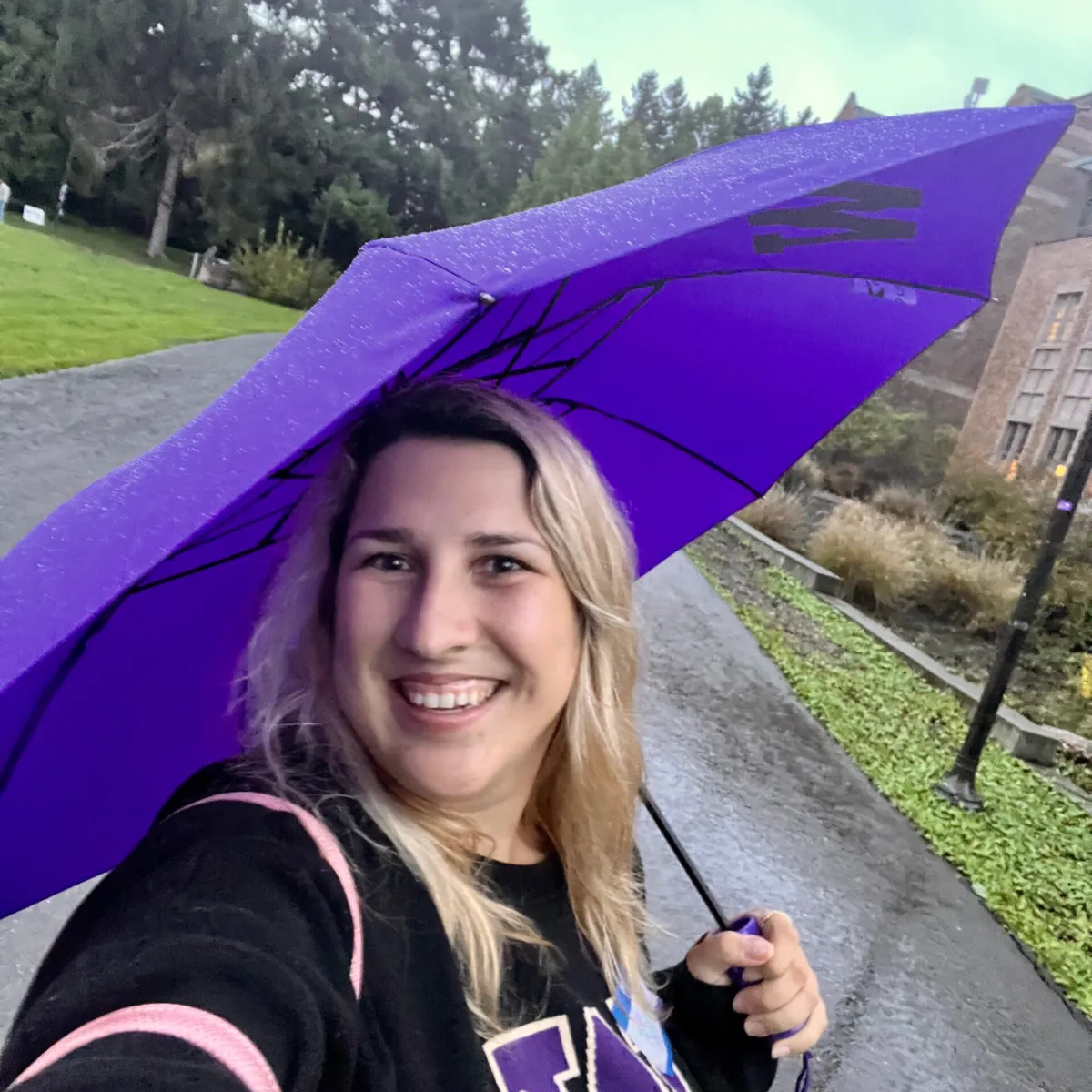
Kate Glazko, a Ph.D. student in the Allen School advised by Mankoff, previously demonstrated bias against people with disabilities in AI hiring tools. She also demonstrated that AI could be trained not to be biased against disability, but that fix was not embraced by AI developers. So Glazko moved on to study systems to help people tailor their resumes so that they are not rejected for things like disability-related awards, while keeping their identities.
"That is the power of generative AI, when it comes to accessibility. It opens doors for people to build their own solutions and personalized solutions, too."
Kate Glazko, CREATE Ph.D. student
Glazko finds ChatGPT biased against resumes that imply disability, models improvement (with links to widespread media coverage)
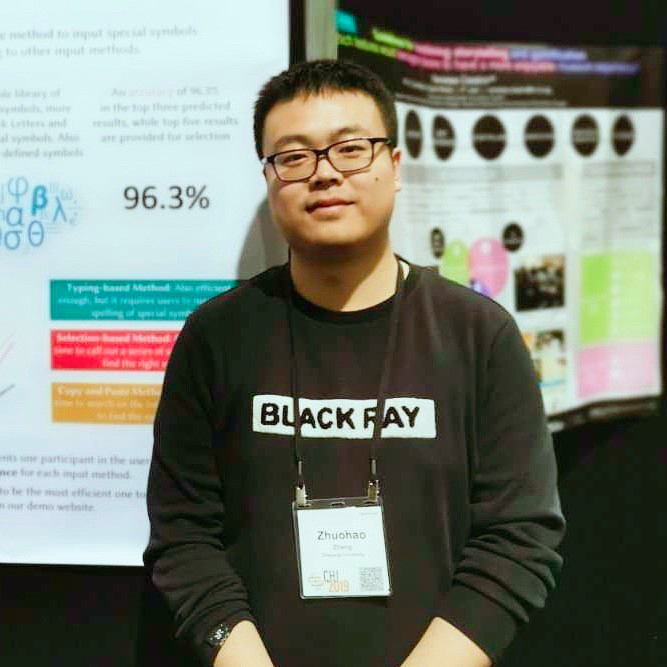
Zhuohao (Jerry) Zhang, a Ph.D. student in the Information School advised by CREATE Associate Director Jacob O. Wobbrock, is developing a program to help low vision and blind people create 3D models. He said the goal is to give as many options, and as much control as possible, back to the users. AI can generate thousands of mediocre designs very quickly, and users don’t always catch the errors and hallucinations.
"If we can design a system that is working for blind users really well, then we are eventually benefiting all people in the end."
CREATE Ph.D. student Zhuohao (Jerry) Zhang
Mia Hoffman awarded 2026 Graduate School Medal
June 29, 2026
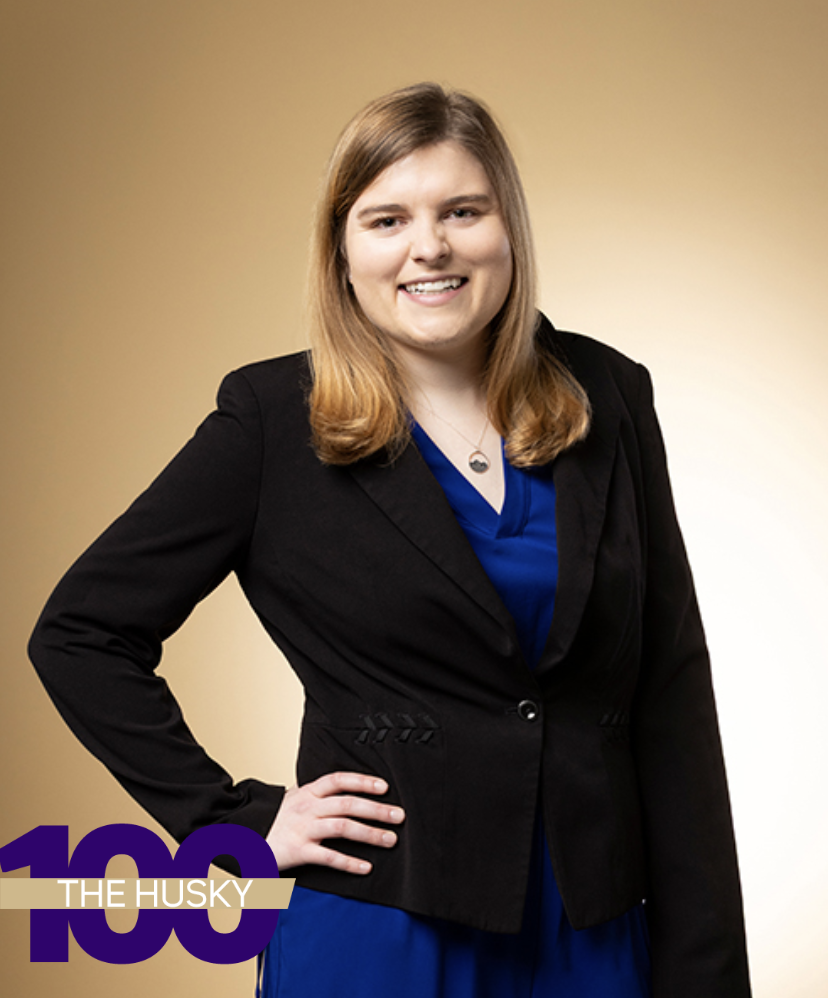
Congratulations to recent graduate Dr. Mia Hoffman, Ph.D. 2026 Mechanical Engineering, on receiving the 2026 UW Graduate School Medal! Hoffman was recognized for her work to reimagine assistive technology for young children.
She was also honored this year by UW Husky100 for “making the most of their time at the University of Washington.”
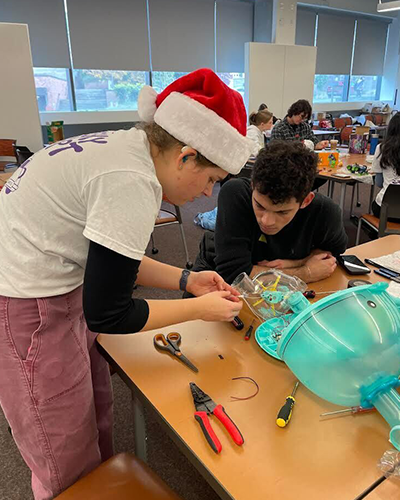
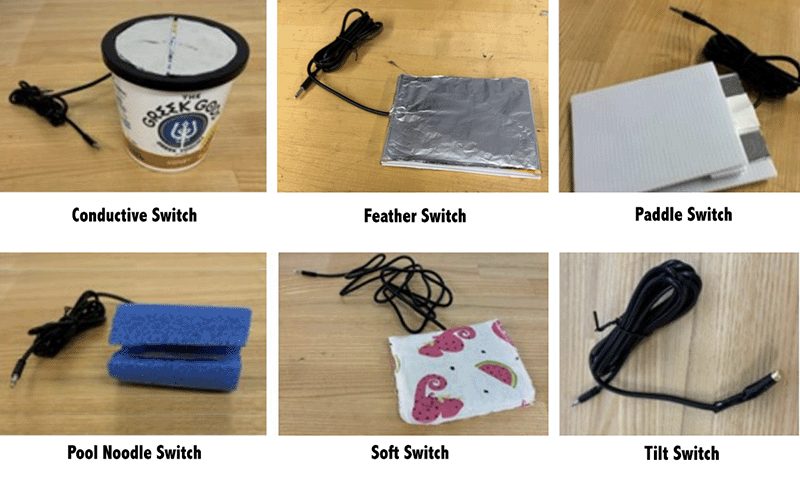
Hoffman led work to develop the Switch Kit, an accessible, customizable system that helps children with motor disabilities to interact with toys and engage more fully in play. With the customized adaptations based on individual abilities, children can activate toys by moving a finger, tilting their head, or blowing a puff of air. Inaccessible controls are re-engineered with new switch mechanisms that may be made from yogurt containers or sections of pool noodles and conductive tape.
While at the UW, Hoffman served as Student Chair of HuskyADAPT, the very active and productive student organization within CREATE. Hoffman and HuskyADAPT members held workshops and created easy-to-use documentation so that volunteers, family members, and clinicians can adapt toys themselves.

Hoffman was advised by CREATE associate directors Katherine M. Steele (Mechanical Engineering), and Heather Feldner (Rehabilitation Medicine). In addition to a Ph.D. in Mechanical Engineering, Hoffman earned a graduate certificate in Disability Studies.
Dr. Hoffman returns to her hometown near Columbus, Ohio, as a President’s Postdoctoral Scholar at The Ohio State University, in the School of Health and Rehabilitation Sciences in the College of Medicine.
The Graduate School Medal recognizes doctoral candidates whose academic expertise and social awareness are integrated in ways that demonstrate active civic engagement and a capacity to promote political, cultural and social change. This article was excerpted from the Graduate School announcement.
CREATE Accessibility Hackathon, Summer 2026
The 2026 CREATE Accessibility Hackathon explored AI solutions to accessibility needs.
This year, we had more community and disability and industry representation than ever before. It led to some wonderful and exciting projects that are continuing to develop through CREATE's Tinkerer Tuesdays, where students, faculty, community members, and others meet and collaborate.
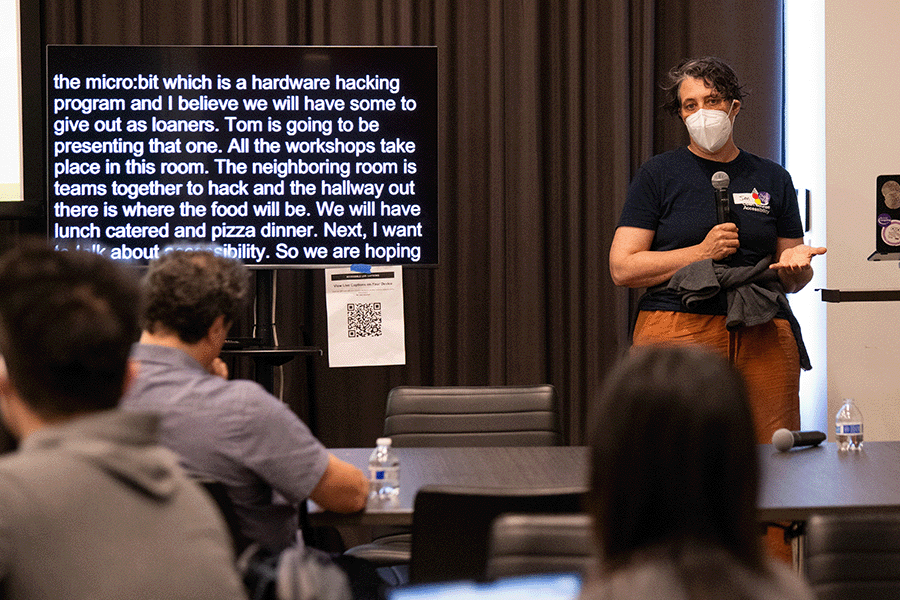
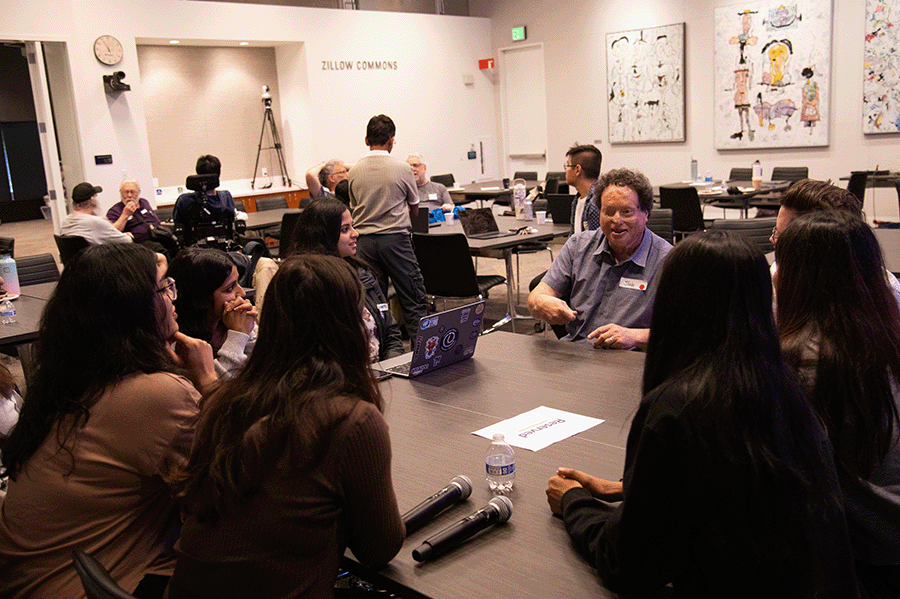
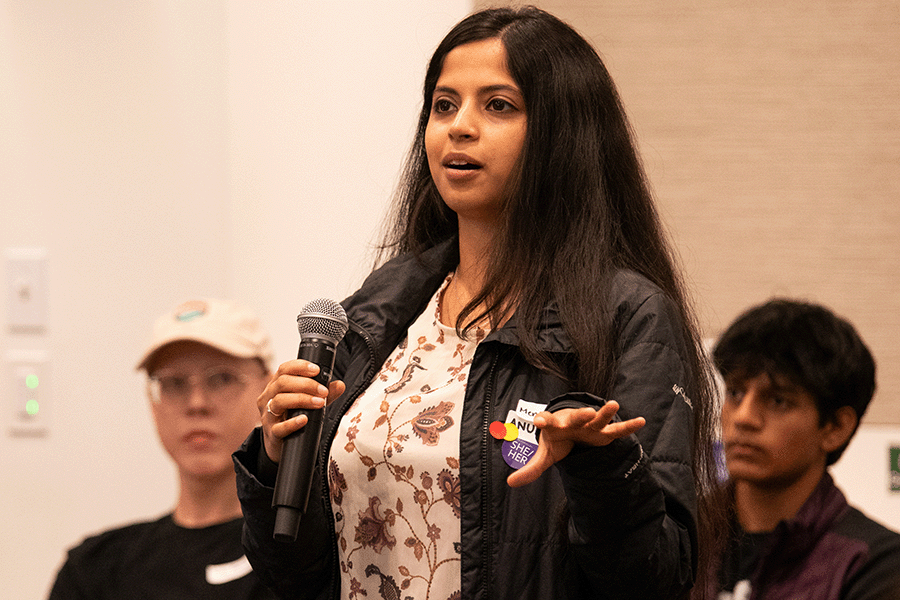
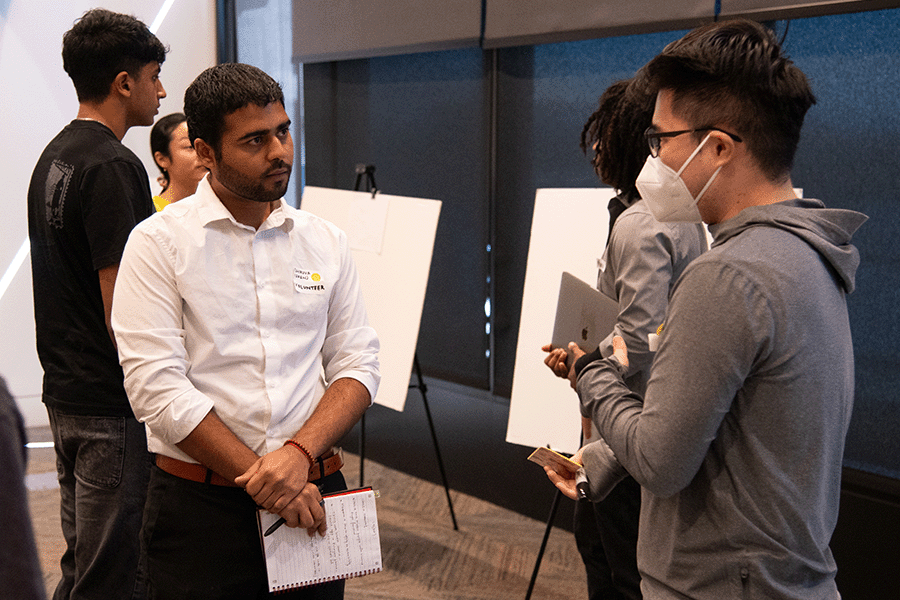
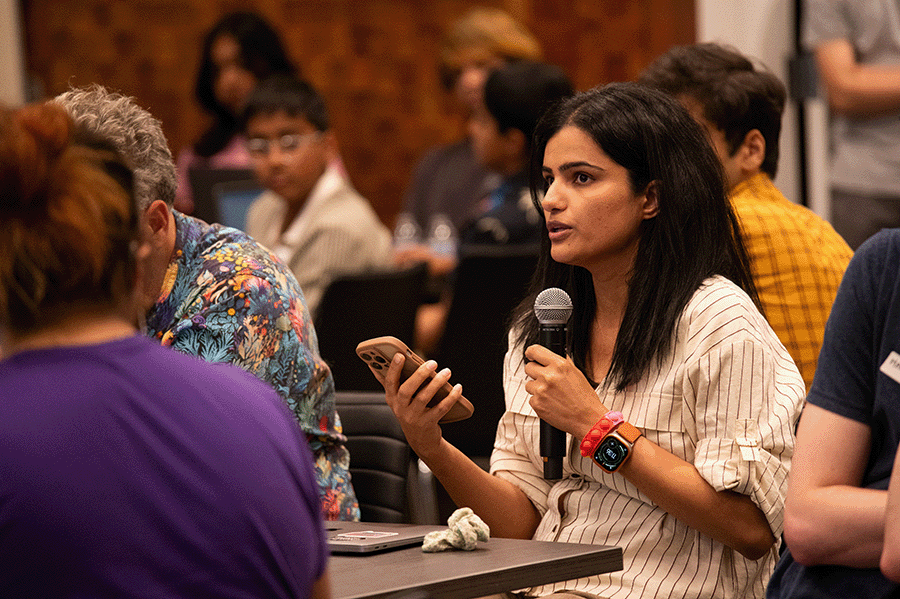
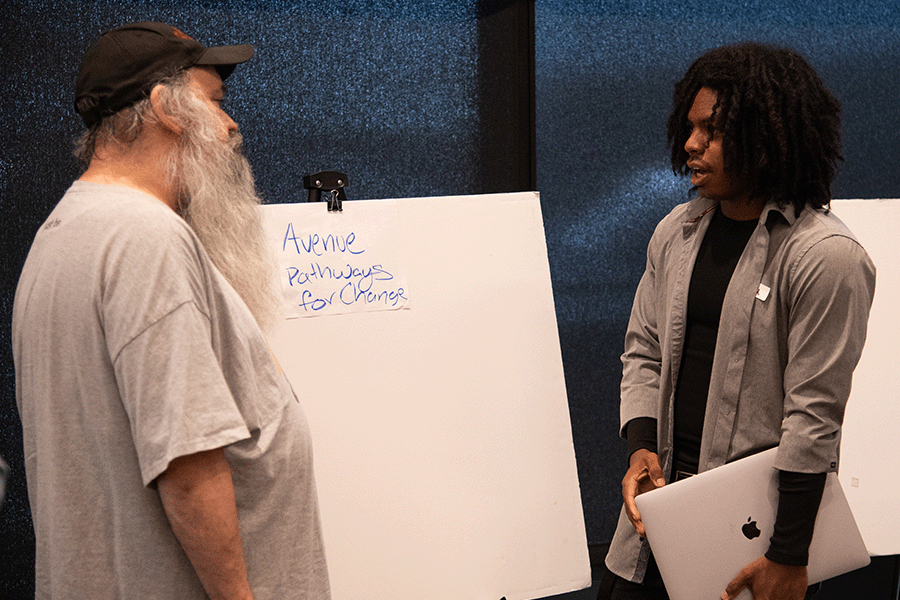
This event was not just for developers. Everyone was welcome and people with lived experience of disability were encouraged to provide the essential perspective for building an accessible future.
Keynote: "Good Hackathons vs. Hackathons for Good"
Joshua Miele kicked off the two-day event with a keynote presentation, complete with his usual humor and grace. Under the banner, "Good Hackathons vs. Hackathons for Good," Miele prepared participants for deep engagement with people with disabilities and for deep listening. Miele encouraged aspiring innovators to make sure that the problems they are solving are truly validated by disability communities, rather than relying on assumptions about what disabled people need.
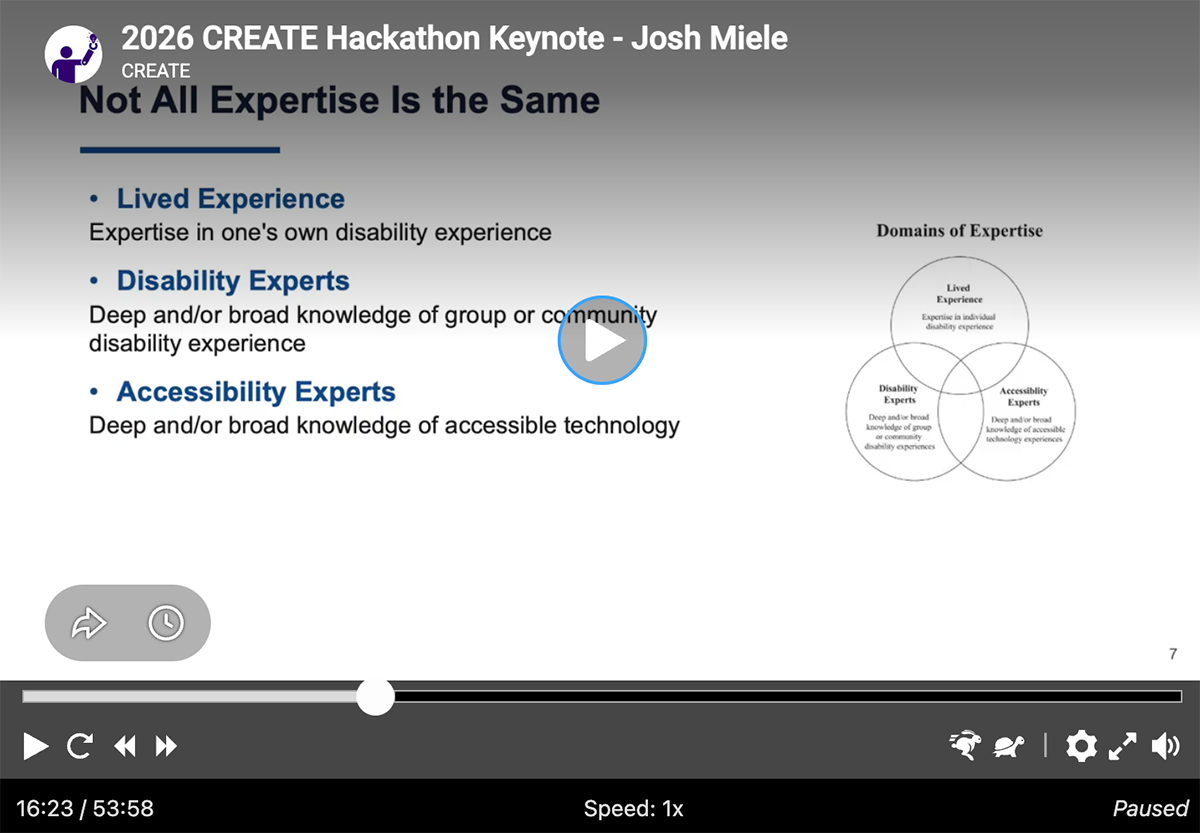
Miele is a CREATE collaborator, blind scientist and designer, MacArthur "Genius" award winner, and disability activist. Learn more about his work at mielelab.com.
Making the hackathon accessible and successful
The hackathon organizing team, along with UW and Harvard staff, collaborated to hold an accessible hackathon. They provided a print and tactile Braille production table with a robust suite of tools for participants to request enlarged print, tactile graphics, embossed Braille, or to explore the latest multiline refreshable displays.
"While [accessibility] accommodations are best planned in advance," noted Brydon Bacaycay, who shared Accessibility Co-coordinator responsibilities with CREATE Director Jennifer Mankoff, "the hackathon organizers also considered solutions to support attendees who might have technical design requests the day of.
Hackathon organizing team
- Jennifer Mankoff: Lead planner and accessibility co-coordinator. Mankoff is the Director of CREATE and the Make4all Lab and is the Richard E. Ladner Professor in Paul G. Allen School of Computer Science & Engineering (CSE).
- Brydon Bacaycay: Accessibility co-coordinator and event consultant. Bacaycay coordinated the Braille production table and offered invaluable expertise in planning an accessible event. He is an assistive technology coordinator at Harvard University based in Washington state.
- Anukriti Kumar: Communications coordinator. Kumar, a CREATE Ph.D. student in the Information School, made sure participants, presenters, and mentors were well informed about the event, schedule, and logistics.
- Kate Glazko: Programming coordinator. Glazko administered hack projects and the Discord server for attendees, and planned and procured food. She is a CREATE Ph.D. student in CSE.
- Kevin Lin: Presentation coordinator. Dr. Lin organized name tags, easels, presentation slides, and volunteers. He is a CREATE faculty member and an assistant teaching professor in CSE. Lin co-directs the Center for Learning, Computing, and Imagination.
We thank these organizers and volunteers for their diligence in putting on a successful and accessible hackathon!
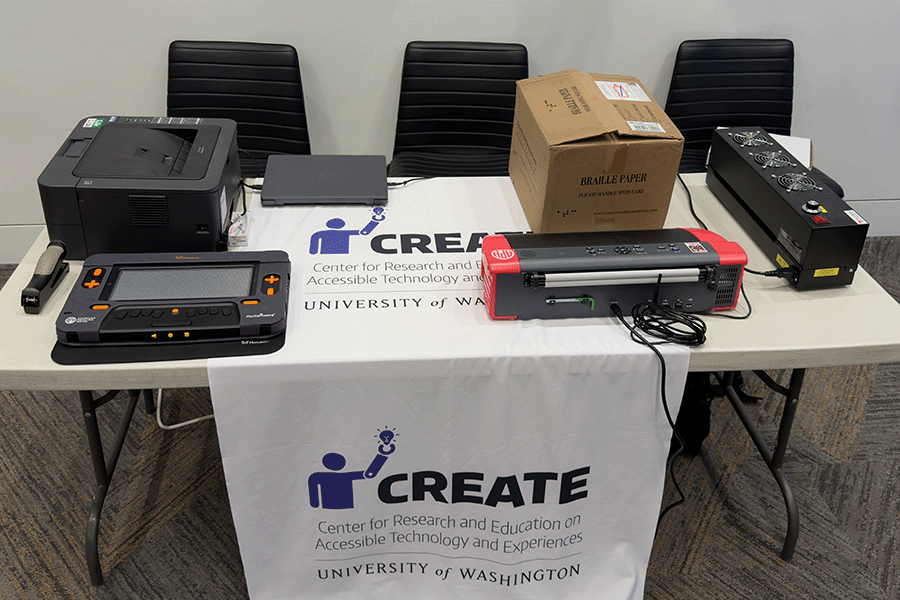
A production table with an assortment of print and tactile Braille equipment. Photo credit: Brydon Bacaycay
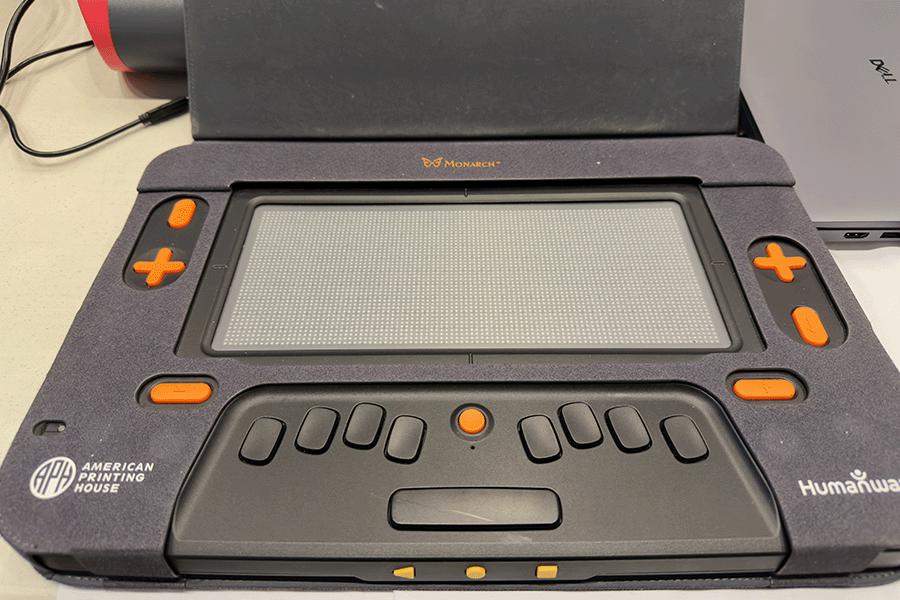
APH Humanware Monarch Display: A Monarch multi-line Braille notetaker. Photo credit: Brydon Bacaycay
Event details
Can't make the whole event? No problem: join for the parts that work for your schedule. Virtual options available for some sessions.
Day 1 events
- Pastries, Coffee, and Meet & Greet. In-person only.
- Introduction: The Potential of AI for Accessibility.
Virtual attendance option. - Keynote: Good Hackathons vs. Hackathons for Good. Speaker: Josh Miele, blind scientist, designer, disability activist, and CREATE contributor.
Virtual attendance option. - Brainstorming Project Ideas & Featured Project Pitches. Learn from community members with lived experiences of disabilities to make sure your hack is solving a real accessibility need. In-person only.
- Lunch
- Workshop 1: Introduction to Vibe Coding and Fundamentals. Leads: CREATE Ph.D. students Kate Glazko and Anukriti Kumar.
Virtual attendance option - Workshop 2: How to Create Accessible Presentations. Lead: Mary Colleen-Jenkins, an instructional accessibility specialist with UW's Accessible Technology Services (ATS).
Virtual attendance option - Workshop 3: Meta’s wearables. Leads: Jay and Fan.
Virtual attendance option - Workshop 4: Accessibility support in MakeCode for the micro:bit. Lead: Thomas Ball, Founding Partner, Micro:bit Innovation and Research Lab.
Virtual attendance option - Pizza + mentorship session. Mentor check-in time. In-person only.
Day 2 events
- Opening & Day 2 Overview
Hybrid based on team preference. - Team work time.
Hybrid based on team preference. - Lunch + Informal Mentor Feedback
- Team work time.
Hybrid based on team preference. - Final presentations & Closing Remarks. In person only.
- Closing remarks and wrap-up. In person only.
Virtual attendance option
Hackathon Accessibility Chair and contact
The Accessibility Chair’s goal is to ensure the conference is accessible to everyone. Contact the Accessibility Chair (CREATE Director Jennifer Mankoff) as early as possible if you have special requests or questions not covered here.
Building and venue questions
For questions specifically about the building and venue, email events@cs.washington.edu. Emails to this address won't be answered late on Friday nor all day Saturday.
FAQs: Accessibility and logistics
Contact the Accessibility Chair as early as possible if you have questions or special requests not covered here.
Event contact information
Event contact informationThe conference registration form includes a question asking about access needs.
In your response, please indicate any accessibility needs such as wheelchair access, sign language interpretation, or a guide. The Accessibility Chair will follow up with you to clarify your needs.
More information about accessibility at the Paul G. Allen School is available on their accessibility information page.
Please contact the Accessibility Chair to discuss your specific needs with the venue directly.
If there is specific accessibility information you would like to see here, or if you wish to discuss any conference accessibility requirements, please contact our Accessibility Chair and someone will respond to you shortly.
For information about Seattle accessibility, including public transport, see Seattle Accessible Travel Guide or contact Citywide ADA Coordinator via email at adacoordinator@seattle.gov or by phone at (206) 684-2489.
Event format: what to expect
Event format - What to expectThe elevator opens straight into the venue space. The bathroom is close to the elevator. The only ramp you’ll need/encounter is at the 1st floor entrance.
Please contact the Accessibility Chair as early as possible if you have further questions or special requests.
Yes, microphones will be used for all speakers. Attendees with questions will be requested to use a microphone so that their question is more easily heard.
Venue: what to expect
Venue - What to expectFor the overall layout of the venue, refer to the maps on this page.
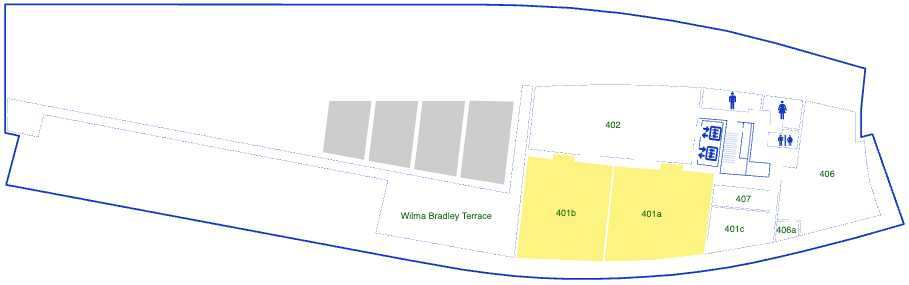
- Friday’s events will be on the 4th floor of the CSE II (Gates) building. The 4th floor has a bathroom, two event rooms, and an entry room.
- Saturday’s events will be held in the bottom floor (Ground) of the same building.
We are still working on an evacuation plan for attendees with mobility limitations.
See our other FAQs for more details about wheelchair or power scooter access, provisions for presenters, restrooms, walking and steps, and facilities for assistance animals.
There is an accessible stall in the 4th floor bathroom. We are still working on a description of the restrooms.
The entire conference venue is a no-smoking area. The University of Washington (UW) Seattle campus is strictly smoke- and vape-free.
The event will not use loud music, strobe lighting, or flash photography.
The UW has an on-campus hospital system. If you require non-urgent medical care, please contact the Accessibility Chair or ask any student volunteer. They will provide you with information about local doctors, specialists, chiropractors, etc.Non-resident attendees are encouraged to consider buying travel insurance that covers medical expenses, as fees for emergency treatment can be very high.
Accessibility and accommodations
Accessibility and accommodationsThe conference will provide a team of sign language interpreters or captioners if requested by any attendees during the early registration period.
Please make your request as early as possible. Our Accessibility Chair will follow up with you to discuss your needs in more detail. After July 16, 2026 (the deadline for early registration), a best effort will be made to accommodate requests, but we cannot guarantee that interpreters or captioners will be available.Student volunteers will be available to assist attendees with disabilities with navigation, meal service, or other accessibility needs.
If you will need volunteer assistance at the conference, please indicate this on your conference registration form.Attendees who require personal care assistance should bring their own assistant. Personal care assistants do not need to register for the conference. If the assistant will be having food and drink provided by the conference during coffee/tea breaks, lunches, and/or the reception, we ask that these be added into the attendee’s registration at the ‘extra options’ stage of the registration process.
There are no extra steps needed for presenting. There will be a podium. Tall chairs and short chairs are both available. The 4th floor event space has no stages; everything should be wheelchair accessible.
If you would like a student volunteer to operate slides or guide you onto and off the stage, or have other accessibility requests please contact our Accessibility Chair by July 16, 2026.
Yes! Guide dogs and other service animals are welcome at the CREATE Accessibility Hackathon. A relief area with water will be available. A grassy area is across the street from the building.
Please indicate on your registration form if you anticipate bringing a service animal to the conference.
We are sorry, but the CREATE Accessibility Hackathon will not be able to accommodate remote attendance by robot.
Induction loops are not available.
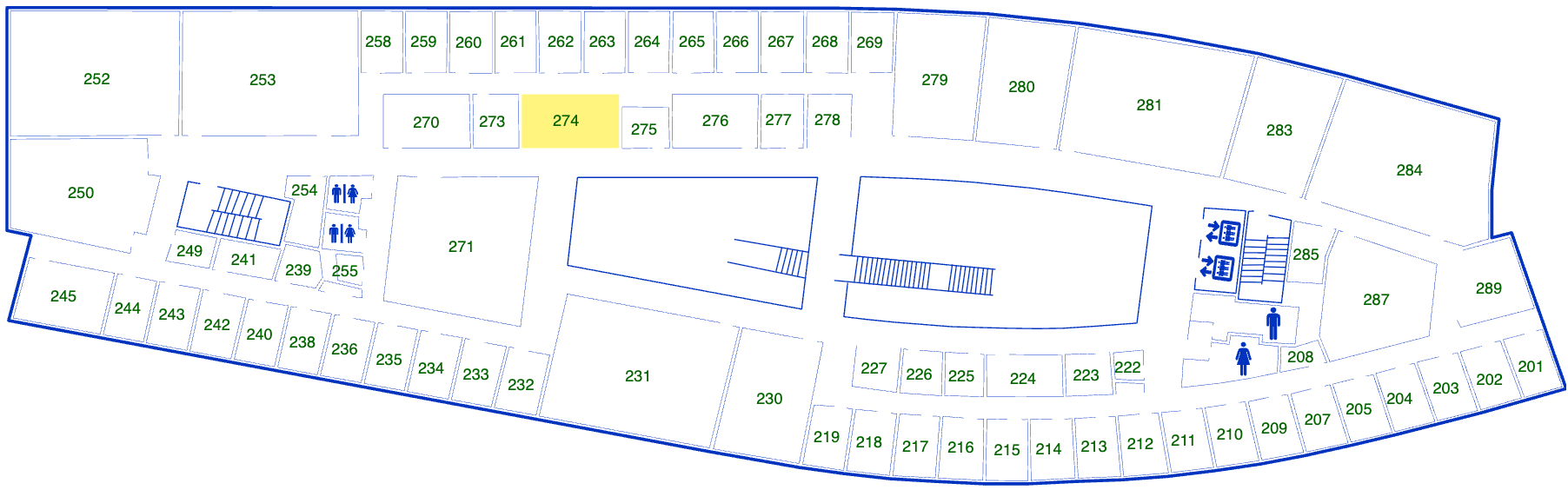
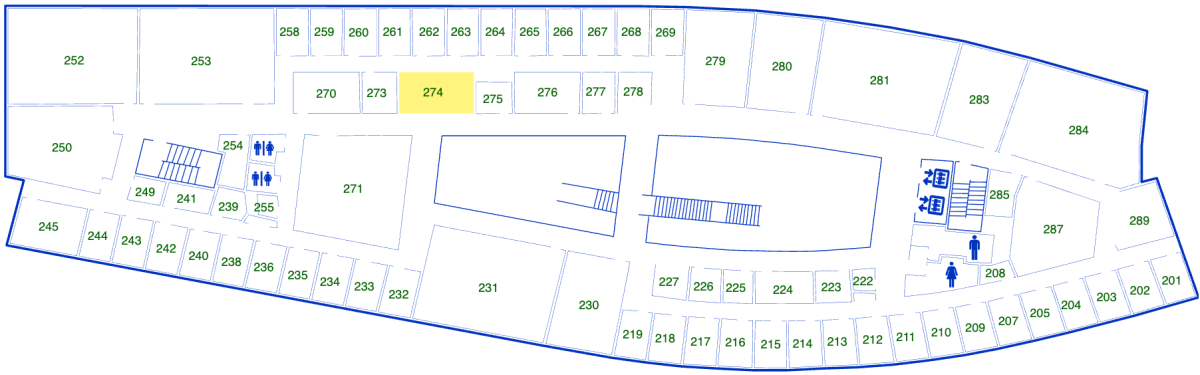
Gates 274 (the Paul & Jessica Mikesell Conference Room, map below) is reserved as a quiet space. On Saturday, attendees will need to be escorted to and from the room.
Yes, the conference will be accessible to wheelchair users. The 4th floor event space has no stages, everything should be wheelchair accessible. There is an accessible stall in the 4th floor bathroom.
Access to the 4th floor:
- First floor entry: There are stairs straight ahead and a ramp to the left. Go up the ramp to the elevators on your right.
- Ground floor entry: Flat all the way to the elevator.
Note: We are still working on an evacuation plan for attendees with mobility limitations.
Food and meals
Food and mealsFriday:
- 9:00 – Coffee and light food during Meet and Greet
- Noon – Buffet lunch, with dishes labeled
- 5:00 – Pizza during Mentorship session
Saturday:
- Noon – Lunch and networking
If you have special dietary needs, please indicate these clearly on your registration form.
Further questions? Contact the Accessibility Chair.
Yes, attendees who indicate special dietary requirements on their registration form will be provided with special meals when the conference catering does not accommodate them.
Food options will include vegetarian and vegan choices. Lunch on Friday will include gluten-free choices; for other meals, registrants can request gluten-free options by contacting the Accessibility Chair.
If you have a severe allergy, please indicate this on your registration form. For more detailed information, contact the Accessibility Chair.
Travel directions and parking
Travel directions and parkingRefer to these web pages for details:
- CREATE Event Directions and Parking for detailed directions and accessible parking information, plus walking directions from parking lots
- The Allen School’s Getting Here page for further information on travel from downtown or Seatac Airport
- UW Seattle maps for interactive maps of the UW Seattle campus
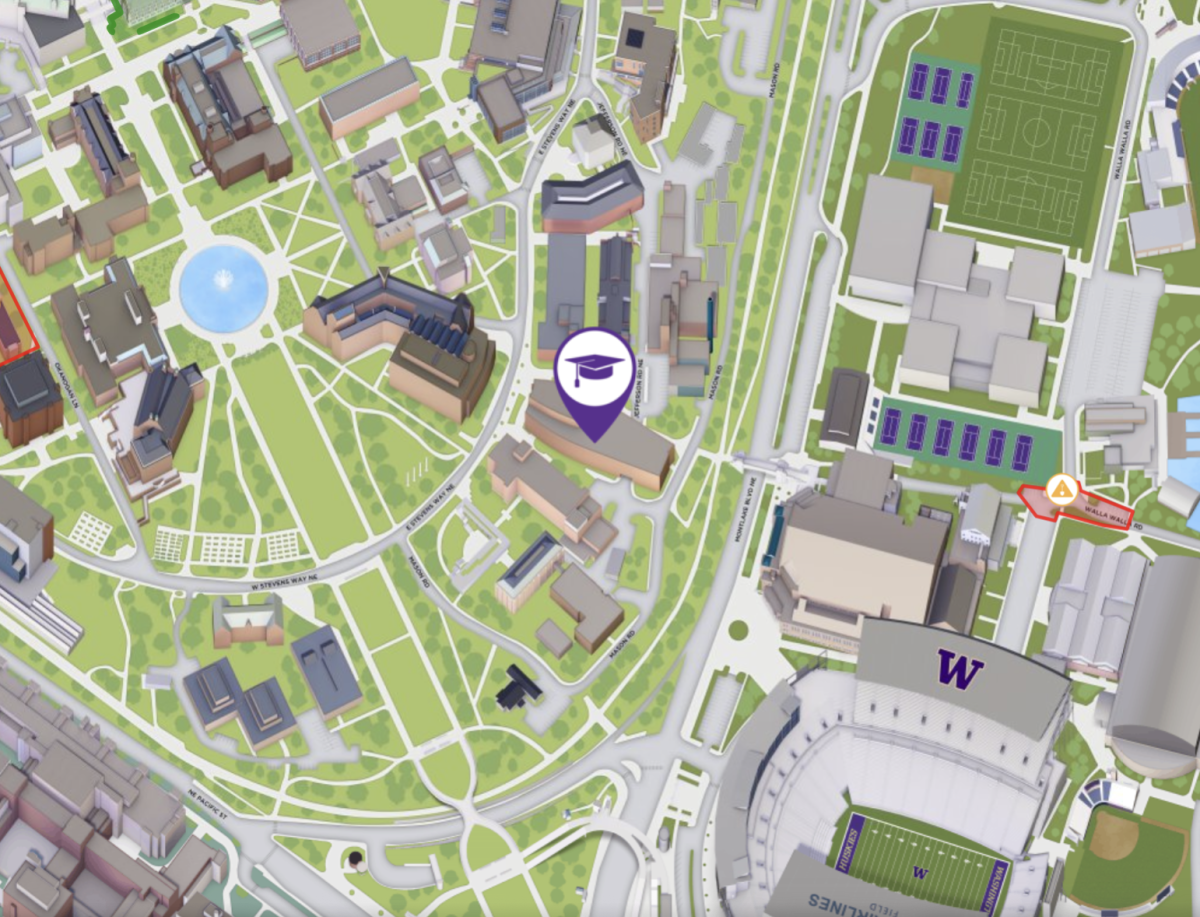
Venue maps
Select the images to view larger.
Campus map, Gates Center
Zillow Commons
Quiet room, Gates 274
Alum Nicole Zaino combines research in biomechanics, assistive technology with world-class Para Nordic skiing
June 17, 2025
While Nicole Zaino was Ph.D. student in mechanical engineering, her study of biomechanics and assistive technology focused on customized mobility devices and how individuals use and are impacted by mobility aids. Advised by Katherine M. Steele and Heather Feldner, she also served as HuskyADAPT's Community Outreach Chair and worked in the IMPACT Collaboratory.
Despite the rigors of her work, she knew she needed a physical outlet for stress. Zaino had always been active growing up but had never tried mobility aids to help with partial paralysis from a childhood stroke. She found Seattle Sled Hockey and her inner athlete. She played professionally for the Seattle Kraken for several years. For her, the balance of Ph.D. student and professional athlete was great. Getting checked into walls... not so great. And then she tried sit-skiing.
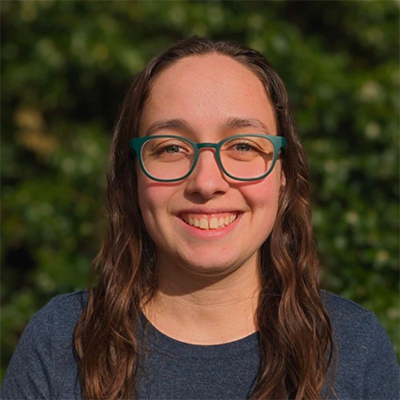
Nicole Zaino, Ph.D. 2023 Mechanical Engineering, Research Scientist at LUCI Mobility
“When I sit-ski, it feels so amazing and graceful and freeing.”
~ Nicole Zaino, research scientist and world-class Para Nordic skier.
"My knowledge of biomechanics and physics has definitely helped me understand what the most efficient position for maneuvering is, for climbing hills with my disability,” Zaino said in a UW Be Boundless article.
That knowledge, her penchant for "finding the 'pain cave' and pushing it," and intense training contributed to a speedy progression from newbie to world-class athlete:
- 2022: First tried sit-skiing
- 2023: First full season training in Bozeman Montana with the U.S. Paralympics Nordic Skiing team
- 2024: Competed in her first World Cup in Prince George, British Columbia
- 2025: Competed in the Para Biathlon World Championships in Pokljuka, Slovenia
- 2026: Competed in her first Winter Paralympics in the Para Nordic and Para Biathlon events
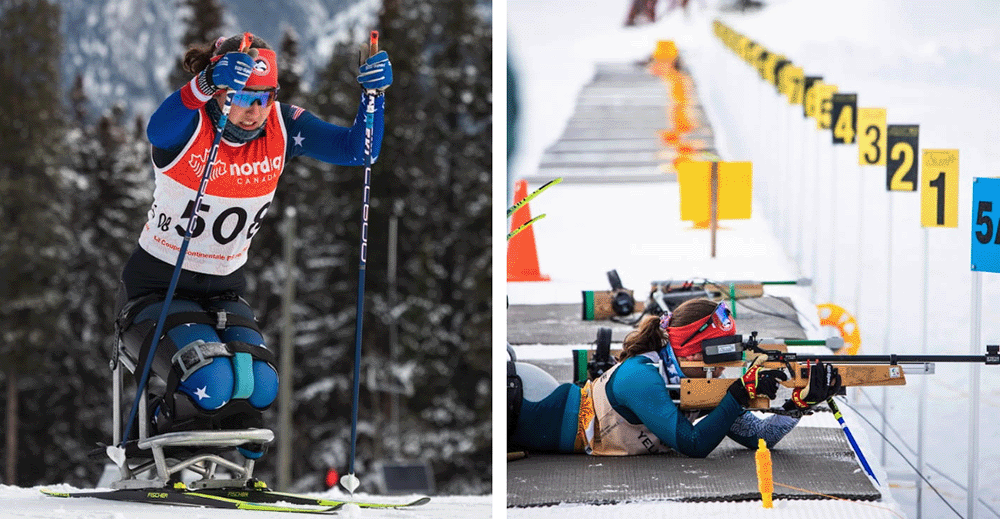
Staying balanced as a research scientist and elite athlete
Now, Zaino splits her time between working as a research scientist in biomechanics and assistive technology at LUCI Mobility and training with the U.S. Paralympic Nordic team in Bozeman Montana.
- Zaino’s Team USA bio
- UW Be Boundless article
- Zaino receives a Mobility Management Future Leaders award
This article was excerpted from the UW Be Boundless article and Zaino's Team USA biography
Steele elected fellow of the American Society of Biomechanics
June 15, 2026
CREATE associate director Katherine M. Steele has been elected a fellow of the American Society of Biomechanics.
In the honor from her primary professional society, Steele was cited for her work integrating engineering and medicine at multiple hospitals across the country, her award-winning research, and her work with CREATE to bridge engineering, rehabilitation, and disability studies.
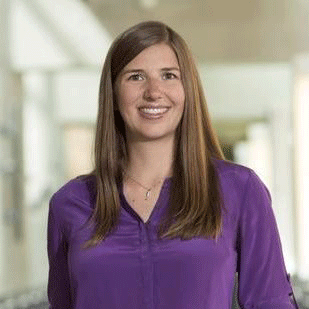
At the UW and in addition to her role in CREATE, Steele wears many titles: Associate Chair of Research in Mechanical Engineering, Director of the Neuromechanics & Mobility Lab, Co-Director of the AMP Lab, HuskyADAPT Faculty Advisor, the Arvid & Marianne Peterson Professor in Mechanical Engineering, and Adjunct Professor in Human Centered Design & Engineering.
Her current work focuses on advancing access to, and effects of, assistive technology for children with developmental disabilities — including cerebral palsy and down syndrome — with funding from the NIH, NIDILRR, Seattle Children's Hospital, and private donors.
The ASB Fellowship recognizes professional achievement and service of the top members of the Society and to encourage continued service to the Society in a leadership role.
Social Stories for Families to Help Children with Autism: Lessons from Panama
April 6, 2026
For individuals with autism and their families, navigating social situations, especially new or unpredictable ones, can be difficult. Research led by CREATE faculty member Annuska Zolyomi has shown that families in Panama have used storytelling to help prepare their children with autism for social situations.
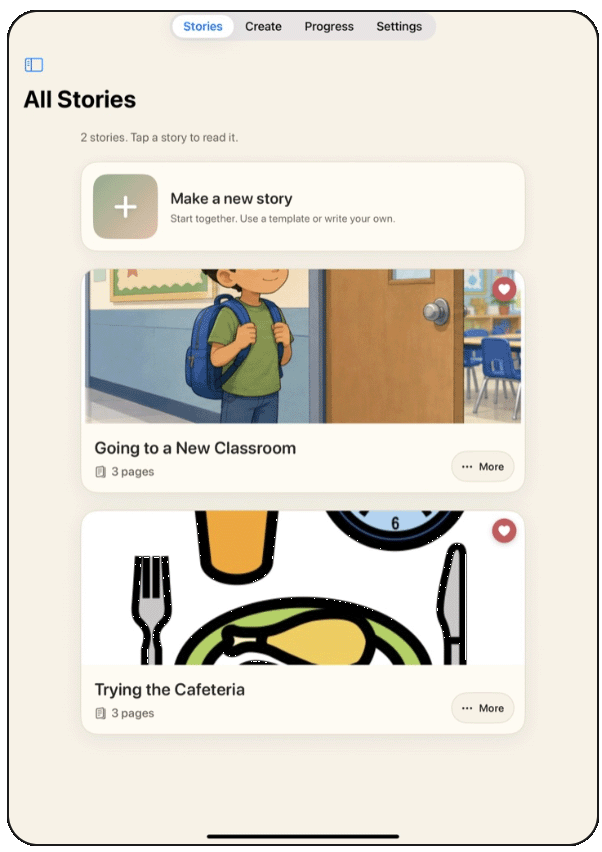
Zolyomi's research, in turn, has led to development of a therapeutic app built off the importance of storytelling in Panamanian culture. Not yet released, the Mystoria app uses the "social stories" model developed by Carol Gray. Zolyomi says her team also uses generative AI (GenAI) to "explore how we can create personalized stories, since those resonate most with autistic children."
Zolyomi appeared on a local Seattle news program, King5's New Day, to share news of the soon-to-be-released app.
Lessons learned from developing Mystoria
“Social stories help people, especially autistic kids... to just prepare and talk about feelings and the sensory: the noises, the sounds, the textures in a new environment, and also the social interactions.”
- Annuska Zolyomi, CREATE faculty member and Assistant Professor, Computing & Software Systems, UW Bothell
Zolyomi brought on a computer science and software engineering graduate student, Kris Yu, to help develop the app, which the team is aiming to launch in an iOS app format. Undergraduates Adriel Mercado and Kat Xie are also collaborating on the app.
According to Yu, the app integrates large language models (LLMs) to help generate social stories for families. Mystoria is also collaborative, allowing both parents and therapists to work together on the same social story, as well as accessible, with features such as playback rate control and text-to-speech narration.
“Designing for neurodivergent users forced me to think about clarity, simplicity, and predictability in a way that improves the entire app, not just for users with disabilities. I'll carry this mindset with me into every product that I build.”
- Kris Yu, software engineering graduate student, UW Bothell
Yu also mentioned Mystoria will function similarly to a social media app, with users being able to view and modify other caregivers’ original social stories. He said the process of implementing Zolyomi’s research into a tangible app has been rewarding.
“It forced me to rethink things I [have] taken for granted,” Yu said. “It made me a better designer and a better engineer in every aspect.”
He noted the differences between working on Mystoria and other apps he's built: in addition to the technical differences in working with a different platform, Mystoria deals with the personal data of children, which requires Yu to prioritize privacy.
Looking forward
The Mystoria app is in development and will continue to go through phases of user study. Zolyomi mentioned that they want to add personalization to the app, so autistic individuals can interact with social stories that are modeled after their own environments. Eventually, the goal is that the app can be released in Spanish and be compatible with Android, which is the most common mobile device in Panama.
Yu said he will continue to work on the app once he graduates and is submitting a simplified version for consideration in Apple’s Swift Student Challenge.
“Long term, I want the app to be adopted by real families, schools, and family practices,” Yu said.
This article is excerpted from TheDaily article, UW Bothell research team develops app to assist individuals with autism and their families, by Mary Andolina.
Community-based research gets new funding for work in computing, information
May 18, 2026
The UW's Community-Engaged Computing Initiative (CECI) is a joint initiative to support projects that bring researchers in computing and information together with community partners. The initiative seeks to bring sustainable, equitable, and inclusive technology into real-world contexts.
With an emphasis on funding research efforts with historically underfunded community partners, CECI supports work that centers the lived experiences of people, whether represented by formalized nonprofits, informal grassroots community organizations, or government-based institutions.
Co-led by the (Allen School), HCDE, and the iSchool, the initiative was launched in 2025 through a gift from Google.




CREATE research supported by CECI
Accessible AI and health management support for adults with intellectual and developmental disabilities
Lead: CREATE postdoctoral researcher Jazette Johnson. Faculty PI: CREATE Director Jennifer Mankoff. 2025-2026.
This research focuses on designing accessible and trustworthy AI-enabled health technologies for adults with Intellectual and Developmental Disabilities (IDD). As AI becomes increasingly embedded in healthcare systems, people with IDD risk being excluded from tools intended to support health management and independence. Johnson and Mankoff partner with community organizations to examine how adults with IDD understand, interact with, and experience AI in health contexts. Their work aims to identify access barriers and develop inclusive AI interfaces, educational materials, and design guidelines that promote autonomy, meaningful participation in healthcare, and improved health outcomes.
AI-enhanced storytelling in blind and low-vision children
Lead: CREATE Ph.D. student Arnavi Chheda-Kothary, Allen School. Faculty co-PIs: CREATE associate directors Jon E. Froehlich and Jacob O. Wobbrock. 2025-2026.
Children commonly create and tell stories as a part of school curriculums, clubs, and social activities. This study explores whether emerging technologies such as AI or tactile tech can assist blind or low-vision (BLV) children in creating and sharing their own stories while preserving their agency as creative storytellers. By enabling BLV children as authors for multimodal stories (visual, tactile), this work will contribute to thinking about tools for sharing stories in mixed-ability groups.
New Voices in CREATE - the 2026 edition
April 21, 2026
In April, the CREATE Accessibility Seminar welcomed three new(-ish) CREATE faculty members to share their research interests in accessibility, disability studies, and disability-related fields.
The faculty members
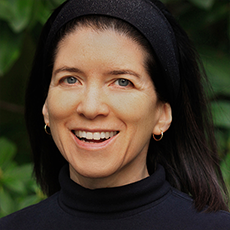
Dr. Cecilia Aragon is the director of the Human-Centered Data Science Lab and a professor emeritus in Human Centered Design and Engineering (HCDE). She has worked in data science, software development, aviation, sociotechnical systems, and accessible computing-related work. She was a co-PI of AccessAdvance until its federal funding was lost in 2025.
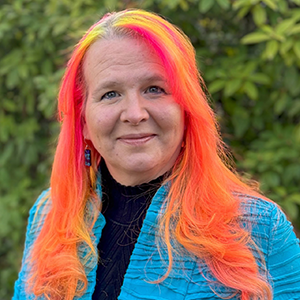
Dr. Wanda Pratt is a professor in the Information School and an adjunct professor at the UW Medical School Division of Biomedical & Health Informatics. Her work focuses on health informatics, with a long-term interest at the intersection of health informatics and accessibility, particularly in how people's health conditions can create accessibility needs.
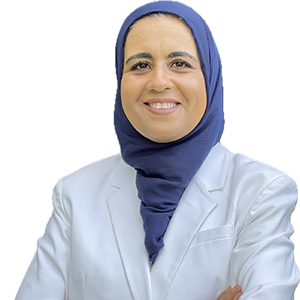
Dr. Rania Hussein is a teaching professor in Electrical & Computer Engineering, teaching Computing & Networking and Data Science. Her research focuses on embedded systems, digital twinning, remote engineering, medical image analysis, and engineering education. She has led several non-profits to promote diversity, equity, and inclusion.
Common threads in the conversation are the need for funding, the desire for connection and collaboration, and the need to involve people with disabilities in research and testing. CREATE can help with that! We shared the following resources:
- Visit CREATE Community Partners Program to learn about support for community-based research offered by CREATE.
- See Research Funding from CREATE for an overview of funding offered by CREATE.
- Find Resources and Funding for Disabled Academics for external funding sources.
- Join to the CREATE Mailing List for announcements of news, events and opportunities
- Join Tuesday Tinkering to experiment and discuss the design and fabrication of accessible technology
The conversation was led by Gina Clepper, a Ph.D. student in Human Centered Design and Engineering and student co-lead of the CREATE Accessibility Seminar.
Cecilia Aragon
Dr. Cecilia Aragon is the director of the Human-Centered Data Science Lab and a professor emeritus in Human Centered Design and Engineering (HCDE). She has worked in data science, software development, aviation, sociotechnical systems, and accessible computing-related work. She was a co-PI of AccessAdvance until its federal funding was lost in 2025.
Dr. Aragon shared that one of her new research interests combines her background in human-centered data science and artificial intelligence with her lived experience as a faculty member with a disability and her commitment to equity.
“Most studies focus on single tools in isolation and most concentrate on visual or hearing disabilities,” said Aragon. She emphasized that those are important, but we need more studies with people with upper limb motor impairments and the ecosystem of accessibility tools.
Last year, she and her Ph.D. student, Sourojit Ghosh, presented a case study at the Human-Computer Interaction Consortium (HCIC) conference based on Aragon’s experience with chronic hand pain. Her work has always been keyboard-centric: writing code, sending emails, writing proposals, etc. She has tried various tools and many new tools have been recommended, but none were tested on people who don’t type or use a mouse. Some she could not even install without the use of a keyboard or mouse.
Aragon has had success with generative AI (GAI) tools for building tools and macros. She envisions a human-centered approach where AI serves as an aid, where one could say, “I can't use this app. Design some macros for Dragon Naturally Speaking that enable me to use this map tool without using my fingers.”
Wanda Pratt
Dr. Wanda Pratt says that while it’s common for people's health conditions to create temporary or short-term accessibility needs, these needs have often been neglected by both the health informatics community and, to some extent, by the accessibility community as well. She has observed that accessibility tools are often designed for long-term or permanent accessibility needs, neglecting the short-term issues and needs in particular health settings.
In a project, called “Patients as Safeguards,” her team looked at ways that hospitalized patients could participate in promoting their own health and safety. Many of the patients, however, had substantial accessibility needs, such as coming out of surgery with temporary cognitive issues, mobility limitations, or inability to use their voices. The patients could not effectively communicate and be part of their own safety team. These issues have not been considered in the hospital ecosystem.
“Like Cecilia, my work focuses on really understanding people's needs from their lived experience and developing tools and technologies only once we have a real deep understanding of those perspectives,” said Pratt. Pratt also shares experience as a programmer with the loss of use of a hand due to a repetitive strain injury.
More recently, Pratt has worked with Dr. Emma McDonell, a CREATE Ph.D. graduate in HCDE and currently a postdoctoral fellow at TU Wien in Vienna, Austria. They sought to understand the perspective of people with chronic health conditions and how those conditions created accessibility needs. They’ve worked on co-design studies and have a paper at the American Medical Informatics Association Conference. Another paper is underway for the ASSETS conference: a description of the kinds of needs that people have expressed and their co-designs for how they envision technology can assist them.
Further work focuses on people's ability to trust the healthcare system when they have been hospitalized for psychiatric reasons. Pratt has seen some unique accessibility concerns when people are temporarily unable to make decisions for themselves or are forced to undergo treatments and chemical or physical restraints. Her research looks at how patients can express their own values and needs in such a way that can be used by the healthcare system in general.
Socio-technical issues in healthcare culture
Pratt was asked, based on her own work in the different spaces of accessible computing and health informatics, what these research communities can offer to each other.
“I think they have a lot to learn from each other. The health informatics community has deep knowledge of how the healthcare system works and what works in a hospital setting. But few in accessible computing have a real knowledge of that setting,” Pratt answered.
“Also the flip is true,” she added. “Accessible computing knows what kinds of tools and technologies could be useful for people with accessibility needs, while clinicians are pretty oblivious to a lot of those things.”
Pratt said she has had conversations with McDonnell and CREATE Director Jennifer Mankoff about how the clinician’s goal is to cure people, not to discover devices like a foot mouse or other accessibility technology that can help when a cure is not possible or immediate.
“That shows a lack of disability justice perspective and a lack of support for someone who cannot use their hands, can’t hear, or who may not want certain medical interventions,” said Pratt.
“Sometimes the accessibility/disability justice perspective does not understand the importance of addressing accessibility needs to improve a person’s chronic condition or to reduce their pain,” Pratt said. “Not simply to accept things the way they are, but to find a mix of getting better and finding ways to better interact with the world – right now and in the future as things change,” she reiterated.
Rania Hussein
During the pandemic, Dr. Rania Hussein started the Remote Hub Lab to provide students remote access to hardware to complete their assignments and get the same quality of education from a distance. The lab provided access to the hardware through a camera. Students could send in their code and see the output, such as how the circuit should be working remotely.
When in-person attendance became possible for most students, the lab shifted to investigating how to promote engagement for non-traditional students who may not be able to come to the lab or are not physically available to read their assignments.
Opportunities for collaboration and testing
In a new project named Redtail, Hussein is combining digital twinning with remote experimentation. She is now looking for students and other users with disabilities to test.
A back-burnered project is a prototype for a low-cost tool to teach coding to kids with visual impairments. It’s a redevelopment of Microsoft’s Code Jumper focusing on lower-cost hardware.
Hussein invites collaborators to help figure out how coding education can be made accessible for students with disabilities. Dr. Mankoff noted that there are really interesting industry people coming to Tuesday Tinkering who work in the hardware and physical computing space, including Tom Ball, a key figure in the development and educational rollout of the BBC micro:bit for teaching kids to code.
CHI 2026: Papers and Presentations on Accessibility
March 23, 2026
Accessibility-related papers, presentations, and workshops from CREATE researchers at CHI 2026, the ACM CHI conference on Human Factors in Computing Systems. We appreciate your patience as we continue to update this page.

Congratulations to CREATE associate director Jon E. Froehlich, who will be honored with a Societal Impact Award at the 2026 SIGCHI Conference in Barcelona!
Papers
Ability heuristics for conducting accessibility inspections
Claire Mitchell, Judy Kong (Ph.D. student), Jesse Martinez (Ph.D. student), Sean Kane (Ph.D. graduate and CREATE advisory council member), Amy Ko (faculty member), Alexis Hiniker, and Jacob O. Wobbrock (CREATE associate director)
Artists on a Decade of AI Evolution: An Interview Study of Affordances, Culture, and Artistic Practice with Machine Learning
Téo Sanchez, Mariya Dzhimova, Stacy Hsueh (former CREATE postdoctoral researcher), Sarah Fdili Alaoui, Vaynee Sungeelee, and Baptiste Caramiaux
GeoVisA11y: An AI-based Geovisualization Question-Answering System for Screen-Reader Users
Chu Li (Ph.D. student), Rock Yuren Pang (Ph.D. student ), Arnavi Chheda-Kothary (Ph.D. student), Ather Sharif (CREATE Ph.D. graduate), Henok Assalif, Jeffrey Heer.
Best Paper
“I Don't Trust it, but I Use it”: Navigating Trust, Privacy, and Identity in Disabled People’s Use of Generative AI
Jazette Johnson (postdoctoral researcher), Aaleyah Lewis (Ph.D. student), Jennifer Mankoff (Director of CREATE), Olivia Banner (CREATE Director of Strategy and Operations)
Interface Support for Evaluating Disability Bias in AI Generated Images
Kelly Avery Mack (Ph.D. graduate), Lucy Jiang (Ph.D. student), Lotus Zhang (Ph.D. student), Leah Findlater (CREATE associate director)
Like, Comment & Caption: A Decade of Social Media Video Caption Research (2015–2025)
Huong Nguyen, Emma J McDonnell (Ph.D. graduate), Lloyd May, Alexander Druzenko, Zoobia Saifullah Syeda, Mark Cartwright, Sooyeon Lee
Honorable Mention
Nonvisual Support for Understanding and Reasoning about Data Structures
Brianna L Wimer, Ritesh Kanchi, Kaija Frierson, Venkatesh Potluri (Ph.D. graduate), Ronald Metoyer, Jennifer Mankoff (Director of CREATE), Miya Natsuhara, and Matt Wang
TaskAudit: Detecting functiona11ity errors in mobile apps via agentic task execution
Mingyuan Zhong (Ph.D. student), Chen, X., Kyi, D.W., Li, C., James Fogarty (CREATE associate director), and Jacob O. Wobbrock (CREATE associate director)
Posters
Access to Interpretation: How Formal Cues Ground Interpretive Alt Text for Paintings
Vera L. Zhong, Lucy Jiang (Ph.D. student), Kathryn E. Ringland
AutismCarebot: Emotion-First, Source-Aware Conversational Support for Autistic Users
Shristi Srivastava, Annuska Zolyomi (CREATE associate director), Dong Si
A Study in Cross-Cultural Relationship Building and Community-Based Research
March 10, 2026
CREATE faculty member Annuska Zolyomi co-led a collaborative exploration of how technology could help autistic individuals and their families. Celebrating Neurodiversity: Ichi-go Ichi-e Symposium, held in Tokyo in 2023, brought together thought leaders in HCI research and autism communities from Japan, North America, and Europe to explore neurodiversity in the Japanese context.
Zolyomi, an assistant professor in Computing & Software Systems at UW Bothell, is the lead writer on a paper about the symposium and outcomes from the cross-cultural conversations.
The symposium centered these important concepts: Community-based research that directly involves neurodivegent individuals and their families in the conversation; perspective of human neurological differences as a natural human condition with strengths and challenges due to living in a world primarily designed for neurotypical people; and inclusive and welcoming cross-cultural conversations that celebrate neurodiversity while addressing human-computer interaction (HCI).
Design concepts explored
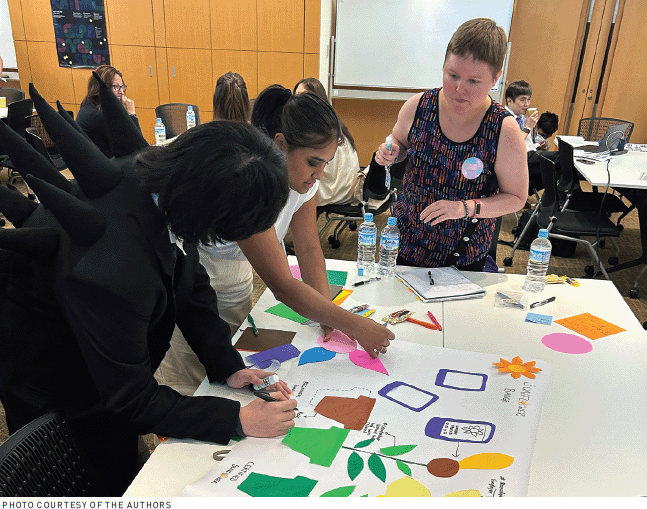
Researchers generated 10 design concepts that aligned with the five A's of celebratory technology: awareness, accommodation, acceptance, advocacy, and appreciation.
For example, one design encouraged self-reflection and empathy through an installation of mirrors to see oneself from another person's perspective. Other designs explored sensory and social needs, as seen in an app mockup that would encourage crowdsourced annotations of physical environments, such as parks. Beyond individual and family supports, one design promoted the recognition of strengths and abilities of neurodivergent employees to empower individuals to showcase their unique talents.
Continuing the conversation
The symposium organizers built on the event with an online workshop held during the Connected Learning Summit, an annual online event hosted by the Connected Learning Alliance to raise awareness of research related to neurodiversity. The organizers hosted a CHI special interest group focused on the design of celebratory technology.
Other participants are collaborating with students and faculty at the Chiba Institute of Technology and the recently opened Neurodiversity School in Tokyo and have organized virtual discussion groups together with support from the Connected Learning Alliance.
Learn more
This article is excerpted from the scholarly paper, Exploring HCI Neurodiversity Research in Japan: Lessons Learned in Cross-Cultural Relationship Building and Community-Based Research, Annuska Zolyomi, LouAnne Boyd, Mizuko (Mimi) Ito, Ayumi Oishi. ACM Interactions magazine, January - February 2026.
Designing Celebratory Technology for Neurodiversity with Neurodivergent Scholars, Louanne Boyd, Annuska Zolyomi. Extended Abstracts of the CHI Conference on Human Factors in Computing Systems, 2024.
OpenThePaths: Connecting people & places through ethical AI
March 9, 2026
If you drive, you've probably used route-finding apps with reasonable success. But these tools do not take into consideration people with mobility challenges who need information about sidewalks, not roads. Washington State’s first map of pedestrian infrastructure, OS-CONNECT, was a main topic at the recent OpenThePaths Conference. Organized by CREATE associate director Anat Caspi, the conference was attended by policymakers, city planners, disability advocates, and technology professionals.
Caspi is an affiliate assistant professor in electrical and computer engineering and directs the UW Taskar Center for Accessible Technology (TCAT) at the Paul G. Allen School of Computer Science & Engineering.
A vision for single-source data for the pedestrian realm
The goal of OpenThePaths and OS-CONNECT is to have accurate, updated, and usable data so that people with different mobility challenges can find routes that work for them and allow transportation officials to fix what isn't working.
- Where are there sidewalks and are there ramps?
- Where are street crossing points?
- Are there steep hills or construction projects that obstruct access?
- Can transit be accessed without stairs and other obstacles?
Ethical use of AI
In the Taskar Center model, data come from a variety of sources, some that don't normally share data — such as aerial imagery, street cameras, and construction contractors — and is used by AI to create a real-time map. Caspi underscored that humans vet all information and will continue to vet and maintain the data shared.
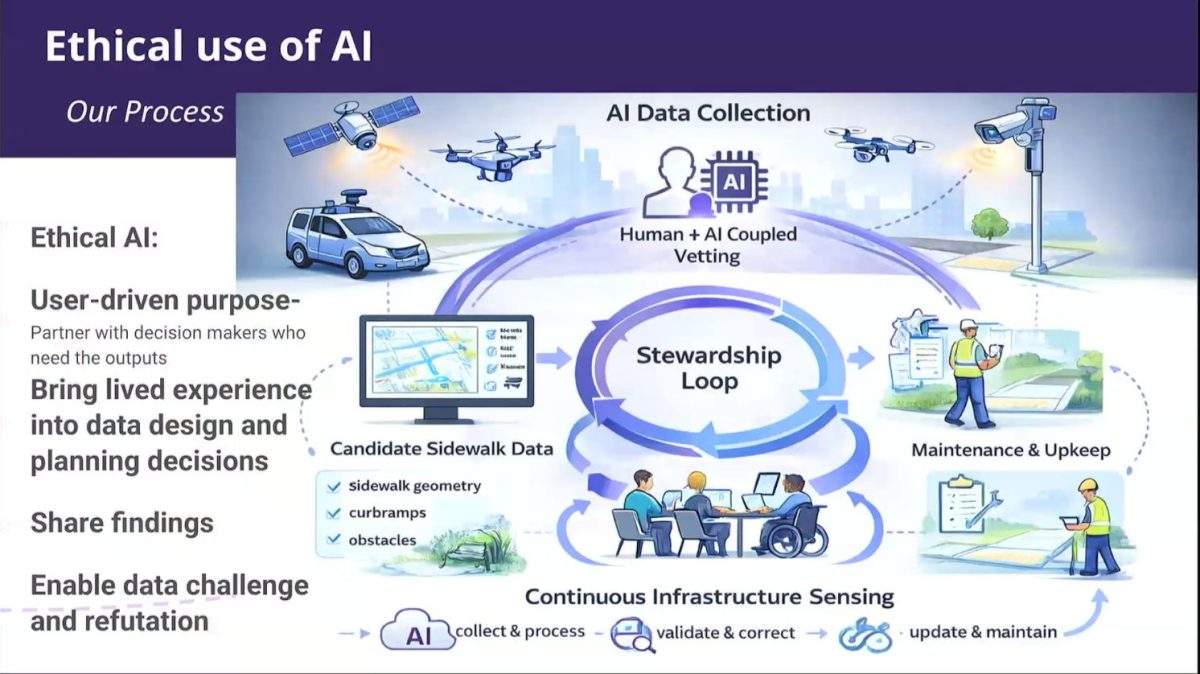
Diagram, produced by TCAT, showing data sources, human vetting and maintenance of AI content to bring sidewalk experience into data design and planning decisions. Caspi acknowledged the many institutional barriers that prevent policymakers from “really subscribing to that shared vision and open shared data that supports non-drivers.”
“That will teach you a lot about how our system works and doesn’t work,” she noted.
Learn more
In a recent podcast, What It Would Take to Map Every Sidewalk in Your State, Caspi spoke about the need for and reach of OS-CONNECT and the conference. She also shared how her late daughter, Aviv, helped inspire her work, the tool named in Aviv’s honor, and the importance of ethical, human-centered, and anti-ableist AI.
More resources:
Ed Summers joins CREATE's advisory board
March 2, 2026
Welcome Ed Summers to CREATE's advisory board!
The Head of Accessibility at GitHub, Ed Summers also serves on disability-related government and not-for-profit boards. As a blind software engineer and leader of accessibility programs within large technology companies, Summers' personal mission is to enable people with disabilities to realize their full potential in the classroom and the 21st century knowledge economy.
"Accessibility is a team sport. It requires contributions from industry, academia, government, and advocacy organizations, just to name a few. Each sector has a role to play. I work in industry and I love to collaborate with leaders from other sectors. CREATE has been a wonderful collaborator and I am very well-aligned with their mission."
- Ed Summers, new CREATE advisory board member

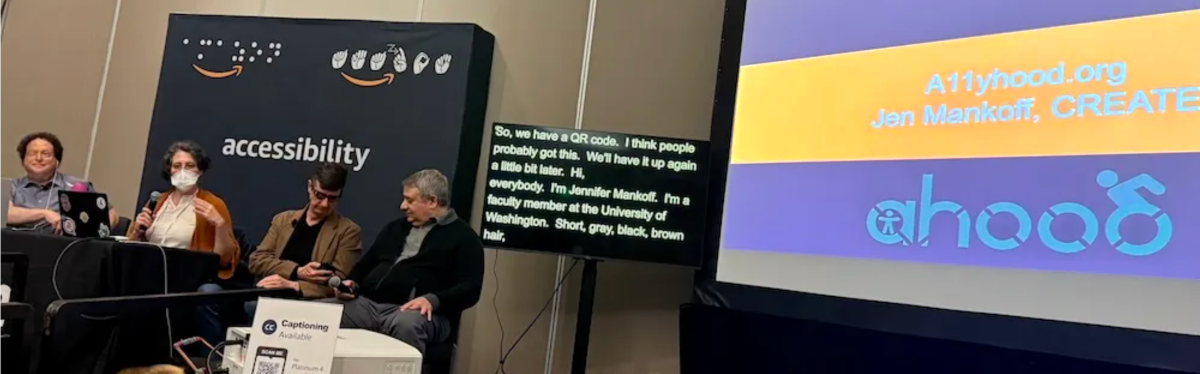
Summers has been advising research on the a11yhood.org project and has appeared on stage with CREATE Director Jennifer Mankoff at the CSUN Assistive Technology Conference and GitHub Universe.
Gratitude to Ebele Okoli
Summers joins us as Ebele Okoli moves on. We thank Okoli for several years of service as an interim, then official, advisory board member.
"We've been very lucky to have Ebele's expertise in disability justice, intersectionality, and mental health. She has brought important perspectives to the CREATE board and I am so grateful for her service and commitment to CREATE over the years."
- Jennifer Mankoff, CREATE Director
Kane, Jayant, Wobbrock, Ladner: 2025 SIGACCESS ASSETS Paper Impact Award
March 6, 2026
A paper on mobile device accessibility and co-authored by CREATE leaders was honored with the 10-Year Lasting Impact Award at the International ACM SIGACCESS Conference on Computers and Accessibility (ASSETS ’25).
The 2009 ACM ASSETS paper, Freedom to roam: A study of mobile device adoption and accessibility for people with visual and motor disabilities, found that people with disabilities had to find ways to adapt to inaccessible technology. The team developed guidelines for more accessible and empowering design.
The lasting impact award recognizes research papers “that [have] had a significant impact on computing and information technology that addresses the needs of persons with disabilities.”
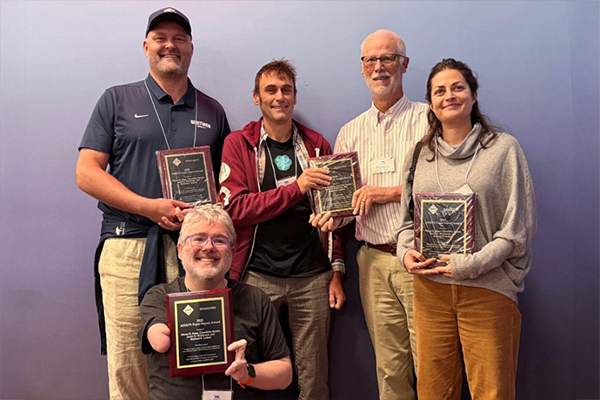
From left to right: Jacob O. Wobbrock, Shaun K. Kane, award presenter, Richard Ladner, and Chandrika Jayant The authors are:
- Shaun K. Kane, CREATE Ph.D. graduate and Advisory Board member
- Chandrika Jayant, former Ph.D. student of Richard Ladner
- Jacob O. Wobbrock, CREATE associate director and former CREATE co-director
- Richard Ladner, CREATE's inaugural Director for Education, Emeritus and a continuing CREATE faculty member
Read more about the award:
- The 2025 SIGACCESS ASSETS Paper Impact Award, AccessComputing
- Professor, Ph.D. alum honored for smartphone accessibility research, UW iSchool
Richard Ladner: SIGCSE Outstanding Contribution to CS Education Award
March 5, 2026
Richard Ladner, CREATE's Founding Director for Education Emeritus and a continuing CREATE faculty member, received the 2026 Outstanding Contribution to Computer Science Education Award at the ACM SIGCSE Conference.
The award cited Ladner’s contributions to accessible computer science education at the K-12, college, and graduate levels and was given “in recognition of long-lasting efforts to develop new technologies and activities to engage people, particularly children, in creative learning experiences based on computational literacy for discovery and expression.”
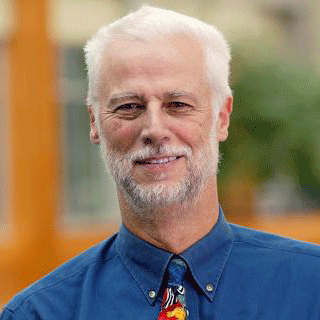
Richard Ladner, CREATE founding Director for Education Emeritus and Professor Emeritus, Allen School of Computer Science & Engineering
Ladner’s work has had a profound impact on the accessibility of CS education, the inclusion of accessibility in the computing curriculum, and the inclusion of disability in broadening participation activities.
The ACM SIGCSE Award for Outstanding Contribution to Computer Science Education honors researchers who have made a long-lasting impact and significant contribution to computing education.
Through mentoring and advocacy, Ladner has directly helped hundreds of students with disabilities to gain exposure to computing as a potential career path. A handful of examples:
- AccessComputing's principal investigator and founder. AccessComputing has supported over 1,500 high school, undergraduate, and graduate students in building skills and connections with mentors and professional opportunities in computing-related fields.
- Summer Academy for Advancing Deaf and Hard of Hearing in Computing, co-founder. The summer academy helped students jump start their academic careers by spending the summer taking computing courses at the UW’s Seattle campus. Three of those students became computing faculty themselves.
- AccessCSforAll's Founding PI and continuing advisor. AccessCSforAll provides accessible computer science curriculum and other resources available to K–12 students with disabilities. Their paper describing the work received the SIGCSE 2019 Best Paper Award.
- “Teaching Accessibility” co-editor with Alannah Oleson and CREATE faculty member Amy Ko. The online book provides computing instructors with tools and resources to help them incorporate accessibility into their teaching.
- More papers: The importance of teaching and learning about accessibility, and Outlining strategies for integrating accessibility into various computer science courses.
This article was excerpted from the Allen School article about Ladner's career at UW as a professor in computer science & engineering.
Jon E. Froehlich Honored with SIGCHI Societal Impact Award
March 3, 2026
CREATE associate director Jon E. Froehlich received a Societal Impact Award at the 2026 SIGCHI Conference for addressing accessibility challenges through HCI and AI.
Froehlich, a professor of computer science and engineering in the Allen School, directs the UW Makeability Lab, utilizing human-computer interaction (HCI) and machine learning to tackle high-impact socially relevant problems. His work has led to improved city planning and sidewalk infrastructure across the globe, and he has developed technologies that have enabled blind and low-vision users to prepare meals, participate in sports and even engage with children’s artwork.
His work on accessible maps (CHI 2019 Best Paper award, UIST 2025) included the first-ever screen reader for Google Street View and real-time sound recognition for deaf and hard-of-hearing users (CHI 2020, CHI 2022, CACM 2022); it has directly impacted product teams at Google and Microsoft. This combination of civic impact, policy influence, and industry translation is rare in HCI; that Froehlich has sustained it across a decade of work is exceptional.
As fellow CREATE associate director Jacob O. Wobbrock noted, "His research in urban accessibility has achieved what few HCI researchers ever accomplish: direct, measurable change on a global scale. Specifically, Froehlich's work has affected how cities invest in pedestrian infrastructure, how communities and governments in 40+ cities plan for accessibility, and how federal agencies define walkability and accessibility data standards. Froehlich's societal impact has been measurable and huge!"
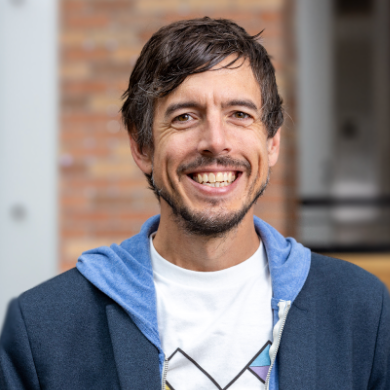
Jon E. Froehlich, CREATE Associate Director
- Professor, Allen School of Computer Science & Engineering
- Director, Makeability Lab
- Associate Director of Tech Transfer and Outreach of PacTrans
- Co-founder of Project Sidewalk
- Core Faculty, Urban Design and Planning Interdisciplinary Ph.D. program
“This recognition belongs to my incredible students and collaborators in the Makeability Lab who work tirelessly to design more accessible, equitable futures and pursue research in accessibility, education, and environmental sustainability.”
- Jon E. Froehlich, in Allen School news
About the award
SIGCHI, the ACM Special Interest Group on Computer-Human Interaction, recognizes mid-career to senior researchers whose HCI work demonstrates social benefit.
Project Sidewalk - real and lasting impact
One project developed in Froehlich's Makeability Lab, Project Sidewalk, has been used by U.S. cities to help fund initiatives to improve the safety and accessibility of their pedestrian infrastructure. In Newberg, Oregon, Project Sidewalk collected more than 17,000 labels and showed that sidewalks were inaccessible especially around voting centers and bus stops, prompting the city council to authorize $50,000 for immediate sidewalk repairs and establish a grant program to help homeowners fix their own sidewalks. After Mendota, Illinois, experienced devastating fires in 2022, community partners used Project Sidewalk data to secure a $3.6 million Illinois Transportation Enhancement Program grant to rebuild their sidewalks.
Past CREATE recipients
Froehlich joins CREATE leaders who have received the SIGCHI Societal Impact Award (formerly "Social Impact Award"):
- Jennifer Mankoff, CREATE Director, in 2022
- Juan Gilbert, former CREATE Advisory Board member, in 2021
- Jacob O. Wobbrock, CREATE associate director, in 2017
- Jonathan Lazar, CREATE Advisory Board member, in 2016
- Richard Ladner, CREATE's Director of Education Emeritus, in 2014