October 26, 2026
Congratulations to CREATE Associate Director Jacob O. Wobbrock on receiving the 2026 SIGACCESS Outstanding Contributions to Computing and Accessibility award! In its award, the ACM group cited Wobbrock’s research on accessible interaction, adaptive user interfaces, mobile accessibility, and human-centered AI.

This lifetime achievement honor makes Wobbrock the 10th recipient in a line of highly accomplished scholars, including Wobbrock’s longtime collaborator, Richard Ladner, CREATE’s founding Director for Education, now Emeritus.
“I am deeply honored to receive this award. No one wins an award like this without a tremendous amount of help and support from many people, including all of my Ph.D. students, current and former, and my terrific colleagues and collaborators, especially those in CREATE.”
– Jacob O. Wobbrock, CREATE Founding Co-Director Emeritus and Professor in the UW Information School
Consistent with Wobbrock’s sentiments, the SIGACCESS award committee wrote, “Above all, Wobbrock regards his most important contribution to accessibility as his students and postdocs. His advisees focused on accessibility have become leading researchers and advocates in academia and industry.”
Wobbrock’s advisees include CREATE community members Leah Findlater (Wobbrock’s postdoctoral fellow from 2009-2011, now an associate director), Rachel Franz (Ph.D. alum), Shaun Kane (Ph.D. alum and current Advisory Board member), Anne Spencer Ross (Ph.D. alum), and Ather Sharif (Ph.D. alum).
Wobbrock and Jennifer Mankoff were founding co-directors of the center. Wobbrock stepped down after three years to continue as an associate director.
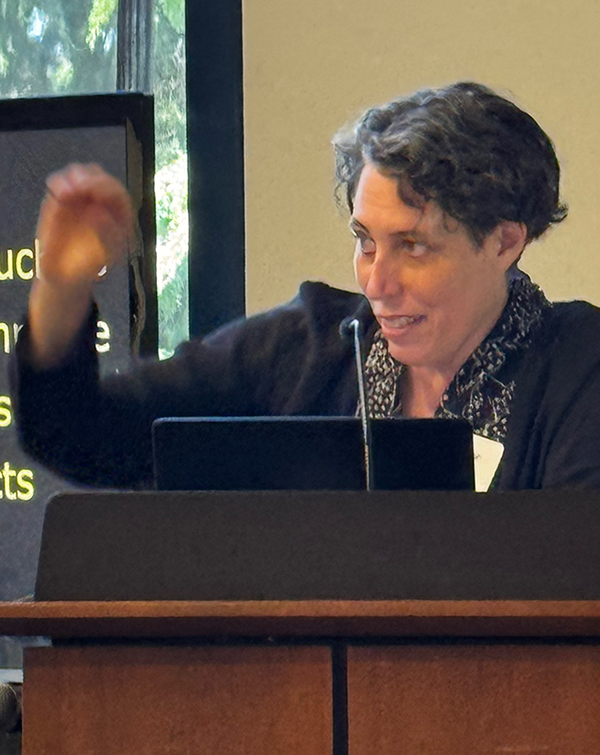
“Jake was an essential partner during CREATE’s startup phase, bringing leadership experience and a deep commitment to accessibility to the team.”
– Jennifer Mankoff, Director of CREATE and Professor, Paul G. Allen School of Computer Science & Engineering
ASSETS Conference keynote
Along with the SIGACCESS award comes the honor of presenting the keynote address at the 2026 ASSETS conference. In that address, Wobbrock shared five research projects that significantly shaped his work and reflected on what he learned from those projects that would have benefitted him as a junior researcher starting in accessible computing.
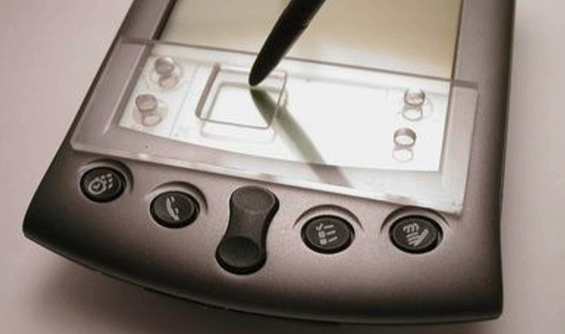
EdgeWrite template for Palm (2003)
The template defines the inside edges of a text entry field on a Palm PDA, providing stability and high accuracy to writers with tremor and limited fine motor function.
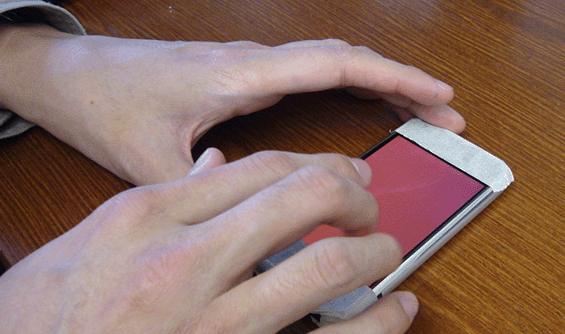
Slide Rule (2008)
The Slide Rule system provides auditory feedback on a multi-touch smartphone. No information is visually displayed but finger location, movement, and gestures result in a touch-based screen reader, one of the world’s first.
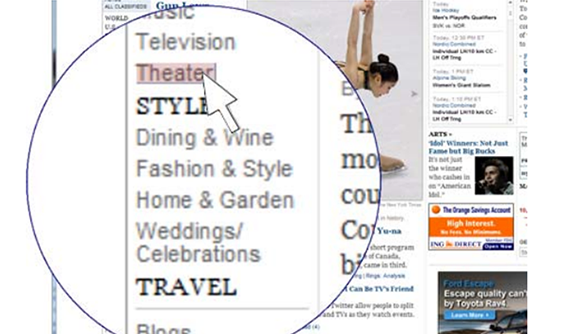
Pointing Magnifier (2010)
The enhanced area cursor visually magnifies a circular area of a display screen. The motor space is also magnified to enable easier point-and-click selection of small targets.
In his keynote, Wobbrock summarized those reflections that also describe key values in CREATE’s work:
- The importance of prioritizing depth
- The power of participant-driven prototyping
- The opportunities and obligations of field deployments
- The importance of conceptual contributions
- The value of cross-disciplinary deep-dives
(The video is best watched in 1080p HD; at other resolutions it can look grainy. Use the gear settings icon, choose Quality, and then choose 1080p HD.)
Looking forward
Wobbrock’s research agenda for the next 20 years is, in his words, “to find ways that AI can really support accessibility but avoid the harmful pitfalls that I think are looming.”
This article uses excerpts from the ACM SIGACCESS announcement and the UW Information School article by Saachi Sharma.
More about Jacob O. Wobbrock on CREATE
- ASSETS 2026: CREATE Papers, Presentations and Demos
- Community-based research gets new funding for work in computing, information
- Kane, Jayant, Wobbrock, Ladner: 2025 SIGACCESS ASSETS Paper Impact Award
- "Dude, what am I gonna do with a touchscreen? It's crazy. I can't feel anything."
- Ability-Based Design Mobile Toolkit: Developer Support for Runtime Interface Adaptation
- A11yBoard accessible presentation software
- CREATE Open Source Projects Awarded at Web4All
- Deep Gratitude to Wobbrock, Ladner & Caspi
- Jacob O. Wobbrock awarded Ten-Year Technical Impact Award
- Wobbrock Co-leads ACM UIST Conference, Brings Accessibility to the Conversation