September 23, 2026
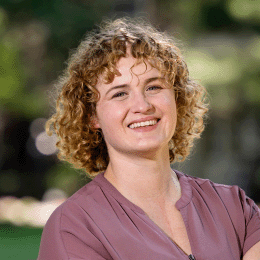
Anne Spencer Ross, Assistant Professor of Computer Science, Bucknell University
Ph.D., UW Computer Science & Engineering, 2021
Advised by James Fogarty and Jacob Wobbrock
Ross’ faculty website
As a CREATE Ph.D. student, Anne Spencer Ross made her mark with an approach to accessibility research that was as novel as the final work was impactful.
Ross led a large-scale examination of data from approximately 10,000 apps to identify seven common types of accessibility failures. The study found, for example, that 23% of the analyzed apps lacked content descriptions for more than 90% of their image-based buttons, making the buttons inaccessible to screen reader users.
“I came up with this conceptual framework where I was drawing from epidemiology—the study of disease in a population—but instead of focusing on people, I was thinking about a population of technology: apps and websites,” Ross stated. “And instead of a disease, I was thinking about inaccessibility as something that can spread from different sources.”
A few years later, the Department of Justice found a CREATE article about the study and cited the findings in their new rule for website and application accessibility.
“The CREATE community was foundational to my development as a researcher and accessibility advocate. The depth of conversations, breadth of perspectives, and supportive environment of CREATE shaped me not only as a scholar but as a person.”
Anne Spencer Ross
Current research: Accessibility in all contexts of life
The overarching theme of Ross’ current work is examining how we can sustainably facilitate accessibility in all contexts of life: from work to play, novices to experts. Areas of particular focus:
- Digital accessibility for small businesses – Current support tools and legislation either disregard small businesses or treat them like smaller versions of large businesses. Through this work, Ross’s team has characterized how the small business context impacts accessibility practices and are currently developing support tools to better meet those needs.
- Burnout in accessibility specialists – This project arose organically through work with specialists who displayed a common thread of value-driven work and burnout. Working with Dr. Chris Mitsch, Ross has identified how central moral values are to accessibility specialists’ work experiences and how that affects burnout.
- Accessibility as a creative catalyst – Working with Dr. Garreth Tigwell and a team of students at Rochester Institute of Technology, Ross has researched how mobile app designers think about creativity, constraints, and accessibility. They are currently developing tools that help designers view accessibility as a creative spark and a natural part of their workflow.
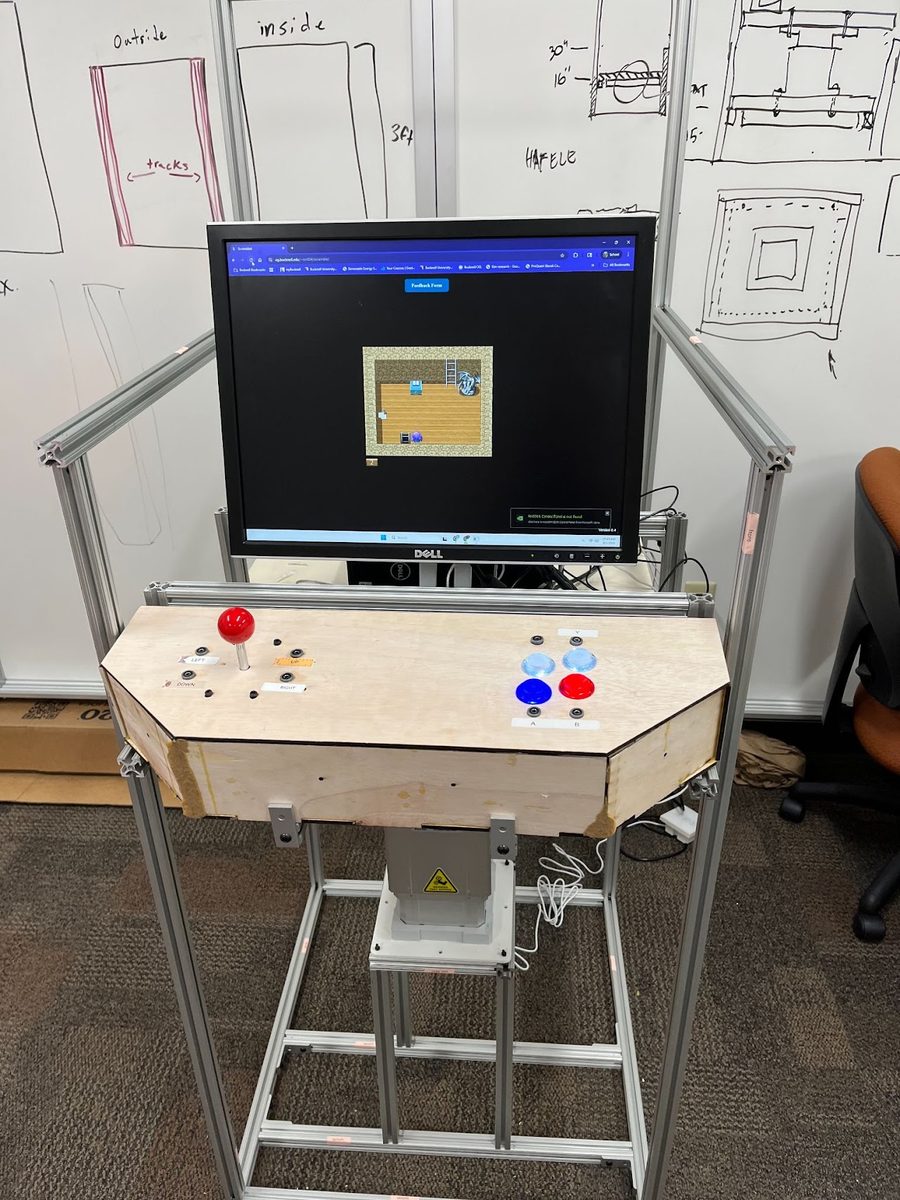
- ARTcade – Ross is leading a cross-disciplinary team of students in building an accessible arcade machine with features such as height adjustment, wheelchair accommodation, and built-in ports for accessible switches. The games being developed for the ARTcade will follow accessibility practices, including a game that teaches accessibility concepts. This project aims to make play accessible to all and use play to foreground accessibility in the game creation process.
Teaching accessibility as a marketable skill
At Bucknell University, Ross created a digital accessibility elective in the computer science department. She designed the course to provide students in any major with knowledge about the historical background of disability advocacy and activism while also giving them the technical skills they need to build a more accessible world. “I’ve actually structured it around industry standards, with the idea that digital accessibility is a marketable skill,” says Ross. “I wanted to create an elective that is as actionable as possible for them to take forward, either as accessibility specialists or just in whatever career they end up in.”

Alumni, share your updates with the CREATE Alumni Update form.
Thank you to Anne Spencer Ross for updating CREATE for this article. The article was excerpted, in part, from a Bucknell University faculty profile on Ross, written by Matt Jones in 2025.